Episode Transcript
[00:00:20] Speaker A: Welcome to Bass by Bass, the papercast that brings genomics to you wherever you are. Thanks for listening and don't forget to follow and rate us in your podcast app.
[00:00:28] Speaker B: It's great to be back.
[00:00:29] Speaker A: So today we're diving into a medical mystery, and it's one that has been hiding in plain sight, really, for decades.
[00:00:36] Speaker B: It has.
[00:00:37] Speaker A: It's about the most common type of birth defect in the world. Something that affects what, over 1% of all babies?
[00:00:44] Speaker B: That's right. Between 1 and almost 2% of all live births. It's a huge number.
[00:00:49] Speaker A: But the mystery here isn't really about the defect itself. I mean, we've gotten very good at the.
The plumbing, so to speak.
[00:00:56] Speaker B: Oh, absolutely. Surgeons have gotten incredibly good at repairing the heart's structure.
[00:01:00] Speaker A: Exactly. But here's the puzzle. You can have two babies with the exact same heart defect, they get the exact same surgery. One grows up, you know, perfectly healthy, maybe becomes an athlete. Right. But the other one, the other one struggles. Severe learning disabilities, maybe autism, other developmental delays, their whole life.
[00:01:19] Speaker B: And for years, the explanation for that was just bad luck.
[00:01:22] Speaker A: Bad luck. Maybe something went wrong in the operating room.
A random roll of the dice.
[00:01:27] Speaker B: That was the prevailing wisdom. Yes. It's a convenient explanation when you don't have the data to point you somewhere else.
[00:01:33] Speaker A: But what if it's not luck at all? What if the answer was written in their DNA the whole time, but we just, we couldn't read it because it.
[00:01:41] Speaker B: Was just too expensive to look.
[00:01:42] Speaker A: Exactly. And that's the breakthrough. We're talking about a technology that dropped the cost of this kind of genetic detective work by 8, 85%.
[00:01:50] Speaker B: An incredible drop. It took it from this high end research tool to something that costs about as much as, you know, a couple of coffees.
[00:01:58] Speaker A: And that lower cost is what finally let researchers see the pattern.
It turns out we've been diagnosing these kids based on how they look on the outside while completely missing the real story happening on the inside in their genes.
[00:02:11] Speaker B: It's a huge story. It's about technology, biology, and really how we even define what a disease is.
[00:02:17] Speaker A: It is. So before we get into the details, we absolutely have to give some credit here. I mean, who are the people behind this massive undertaking?
[00:02:24] Speaker B: This was a colossal effort.
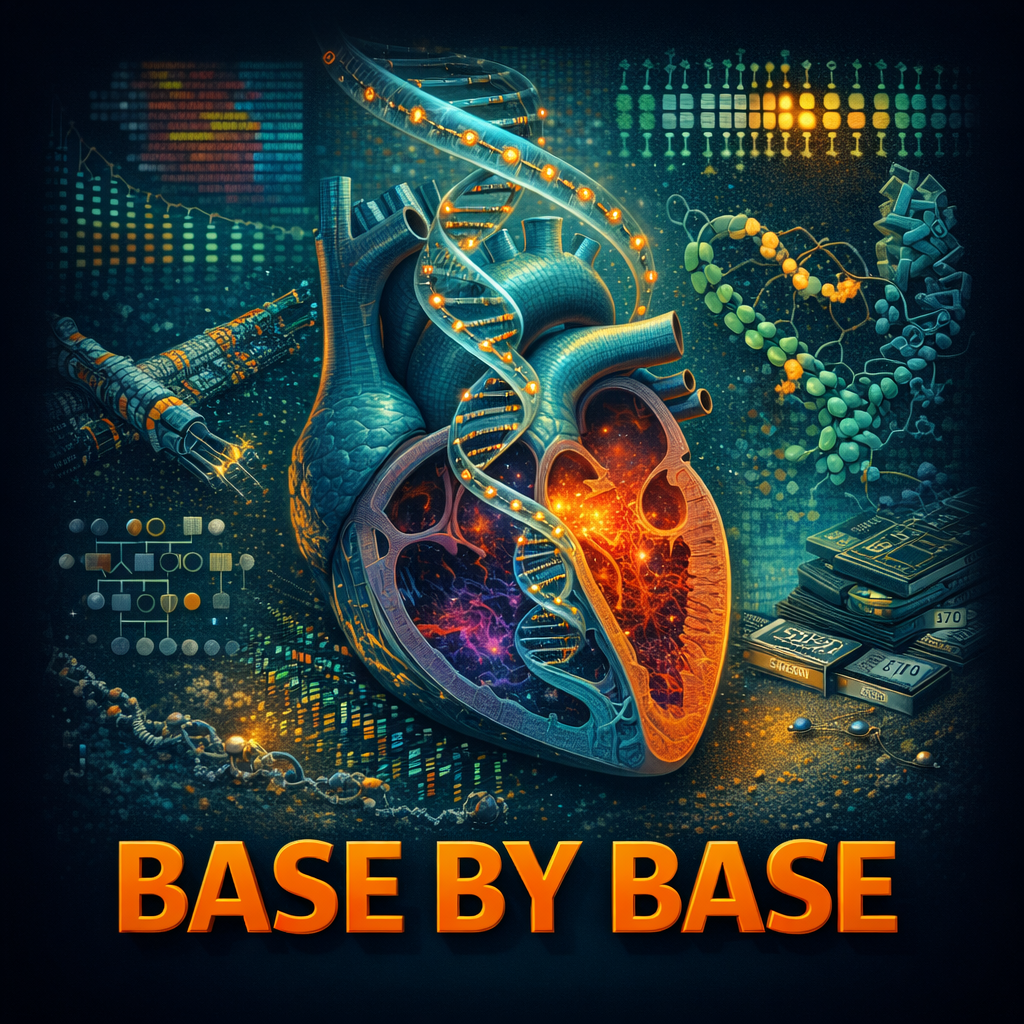
We really have to celebrate the work of the Pediatric Cardiac Genomics Consortium, the PCC, and the Pediatric Heart Network.
[00:02:35] Speaker A: A huge collaboration.
[00:02:36] Speaker B: A huge one. The paper we're looking at was led by Michael Sierrant, Martina Bruechner and Richard Lifton.
[00:02:42] Speaker A: Some of the biggest names in the.
[00:02:43] Speaker B: Field, without a doubt, they're working out of Yale, the Rockefeller University, and, you know, a whole host of other amazing institutions. Their mission was, well, it was simple to say, but incredibly hard to do, which was to stop guessing about the genetics of congenital heart disease and to actually map it out base by base in the largest group of patients ever put together.
[00:03:05] Speaker A: Okay, so let's set the stage a bit. Congenital heart disease, or chd. We know it's common and we know it's serious.
[00:03:11] Speaker B: It's the leading cause of infant mortality from birth defects, period. Wow. About a third of these infants need a life saving intervention like surgery in their first year.
The good news, though, is that now about 90% of them survive into adulthood.
[00:03:26] Speaker A: Which is incredible progress.
But I think you're hinting that survival isn't quite the same as thriving.
[00:03:31] Speaker B: That is the crucial distinction. As this generation of survivors grows up, we see really high rates of other problems.
[00:03:38] Speaker A: Comorbidities.
[00:03:40] Speaker B: Exactly. Heart failure, arrhythmias. And the one that's most distressing for families, neurodevelopmental disabilities, cognitive issues that can really impact their quality of life.
[00:03:52] Speaker A: And we've known for a while there was a genetic piece to this puzzle, right?
[00:03:55] Speaker B: Oh, yes, it runs in families, but finding the specific genes has just been a nightmare.
[00:04:01] Speaker A: A needle in a haystack kind of problem.
[00:04:03] Speaker B: A classic needle in a haystack.
The old way of doing this whole exome sequencing was powerful, but it used to cost about $170 per person, which.
[00:04:13] Speaker A: Sounds manageable until you realize you don't need 10 people, you need 10,000.
[00:04:16] Speaker B: Precisely to find these rare mutations. You need massive, massive sample sizes. And at that price point, it just wasn't feasible. That's why previous studies had only really nailed down about seven genes.
[00:04:27] Speaker A: Seven.
That is barely scratching the surface. So they had to break that cost barrier.
[00:04:32] Speaker B: They had to.
[00:04:33] Speaker A: And this brings us to the methodology, which I have to say is just incredibly cool.
[00:04:37] Speaker B: They use something called misec, Molecular inversion Probe sequencing.
[00:04:42] Speaker A: Let's break that down, because the paper says this is how they got the cost down to around $25 a sample. How does that work?
[00:04:48] Speaker B: It's a brilliant bit of engineering. So imagine you want to read a few specific sentences in a giant encyclopedia, but you don't want to pay to photocopy the entire thing.
[00:04:57] Speaker A: Okay. Standard sequencing is like photocopying the whole book.
[00:05:00] Speaker B: Exactly. MISIC is different. You create a custom probe. It's a single strand of DNA with two arms on the end.
[00:05:08] Speaker A: And these arms are specific.
[00:05:09] Speaker B: They're designed to match the beginning and end of the exact gene target you want to look at. You mix these probes with the patient's DNA. The arms grab onto their target and the probe snaps into a loop.
[00:05:20] Speaker A: So it lassos the gene you care.
[00:05:22] Speaker B: About, it lassos it perfectly.
Then an enzyme comes in and fills the gap, copying only the DNA inside the loop. Now, you have a closed circle of DNA. Okay, and here's the really clever you add another enzyme and exonuclease, which is.
[00:05:38] Speaker A: Like a molecular shredder.
[00:05:39] Speaker B: It's a shredder. Yeah. It chews up any DNA that's in a straight line.
So all the original patient DNA, any probes that didn't find a target, it all gets destroyed.
[00:05:50] Speaker A: But it can't chew up the circles.
[00:05:52] Speaker B: It can't touch the circles. So you're left with a pure sample of only the targets you wanted to read. You're not wasting a single cent sequencing the billions of DNA letters you don't care about.
[00:06:03] Speaker A: That is so smart. It's like searching for a needle in a haystack by just burning all the hay.
[00:06:07] Speaker B: That's a surprisingly good analogy, actually. And that efficiency is how they got the price down to 25 bucks, which.
[00:06:14] Speaker A: Let them assemble this massive group.
[00:06:16] Speaker B: 11,555 patients and a scale that we've just never seen before in the sphere.
[00:06:22] Speaker A: Okay, so they have the tech, they have the patients. They targeted 248genes that previous research hinted might be involved. What did they find?
[00:06:28] Speaker B: They blew the doors off it. They identified 60 genes with a significant burden of damaging variants.
[00:06:34] Speaker A: 60.
So they went from seven known genes to 60.
[00:06:38] Speaker B: It's a landmark discovery. And these 60 genes explain the cause of the heart defect in over 10% of all the patients in the the study.
[00:06:46] Speaker A: That's one in 10 kids who now have a specific molecular answer.
[00:06:50] Speaker B: Yes. And Even more exciting, 13 of these genes had never ever been linked to congenital heart disease in humans before.
[00:06:59] Speaker A: I want to dig into some of these because the paper tells a few really distinct stories. Let's start with what you could call the heart specific story. The gene MYH6.
[00:07:09] Speaker B: Right. This is one of the most compelling parts of the paper. MyH6 makes a protein called alpha myosin heavy chain, which is. It's the engine of the heart muscle cell. It's the protein that physically contracts to pump blood. And critically, it's pretty much only expressed in the heart.
[00:07:24] Speaker A: So it's a specialist. It's not doing anything in the brain or the liver.
[00:07:27] Speaker B: Correct. And they found that the damaging mutations in this gene were often transmitted. They were inherited from a parent.
[00:07:33] Speaker A: Okay, wait. If a parent pass it down, why wasn't the parent in the hospital with a heart defect?
[00:07:38] Speaker B: That's the million dollar question. It's a concept we call incomplete penetrance.
The parent carries the variant, but for whatever reason, other protective genes, maybe environment, they never develop a serious problem. But they're a carrier.
[00:07:53] Speaker A: And if they pass her on, the.
[00:07:55] Speaker B: Risk to their child is huge. They calculated the risk ratio at 6. So a six fold higher chance of having a defect.
[00:08:02] Speaker A: That must be terrifying for a parent.
[00:08:04] Speaker B: Yeah.
[00:08:04] Speaker A: You feel fine, you have no family history, and then your child is born with a serious issue.
[00:08:10] Speaker B: It is, but.
And this is a really important but, there's some good news here, relatively speaking.
[00:08:15] Speaker A: Okay.
[00:08:15] Speaker B: Because MyH6 only works in the heart, the damage is contained there. These kids mostly had isolated heart defects, like holes between the chambers.
[00:08:24] Speaker A: So things a surgeon can fix.
[00:08:25] Speaker B: Yes. And the risk of having a neurodevelopmental delay was incredibly low, around 4%.
[00:08:31] Speaker A: So if a parent gets a genetic report that says the cause is my age 6, they can breathe a huge sigh of relief about their child's future cognitive development?
[00:08:39] Speaker B: For the most part, yes. It predicts a structural problem, not a systemic one.
[00:08:43] Speaker A: Okay, so that's one path, the isolated heart problem. But then there's the other group of genes, the chromatin genes. And this seems to be the much heavier side of the story.
[00:08:52] Speaker B: It is. This is the other side of the coin. They found 10 genes involved in what is called chromatin modification. Genes like KMT2D and CHD7 remind us what chromatin is. Chromatin is the packaging for your DNA. Your DNA is incredibly long. So to fit inside a cell nucleus, it has to be wound up really tightly around these protein spools.
[00:09:12] Speaker A: Right.
[00:09:12] Speaker B: Chromatin genes control how tightly or loosely that DNA is wound. If it's wound too tight, a gene can't be read. If it's too loose, it might be read when it shouldn't be. They're master regulators.
[00:09:24] Speaker A: So they're like the librarians of the genome deciding which books get opened.
[00:09:27] Speaker B: That's a great way to put it. And because every cell needs organize its library, these genes are expressed everywhere. In the heart. Yes, but also critically in the brain.
[00:09:37] Speaker A: And I think I see where this is going. If you break the librarian, you don't just mess up one section of the library, you mess up the whole thing.
[00:09:44] Speaker B: The correlation was just Stark. Unlike the MYH6 kids, patients with These chromatin gene mutations had very high rates of problems in other organs and severe neurodevelopmental delay.
[00:09:56] Speaker A: How severe are we talking?
[00:09:57] Speaker B: Let's take the gene CHD7. If a child had a damaging mutation in that gene, their risk of neurodevelopmental delay wasn't 4%.
[00:10:06] Speaker A: What was it?
[00:10:06] Speaker B: It was about 95%.
[00:10:08] Speaker A: 95. That's. That's not a risk factor anymore. That's a near certainty.
[00:10:11] Speaker B: It's an overwhelmingly strong predictor. And that knowledge completely changes the conversation for that family and their doctors. You're not just treating a herd anymore.
[00:10:20] Speaker A: You're preparing for a lifetime of cognitive challenges. That's.
Wow. Okay. This all leads to what might be the most important part of the paper, the discussion about hidden syndromes.
[00:10:31] Speaker B: This is where it gets really practical for doctors. So we've known about certain genetic syndromes for a long time, things like Kabuki syndrome from the KMT2D gene or CHARGE syndrome from CHD7.
[00:10:42] Speaker A: And doctors are trained to spot these. Right. They look for a specific set of physical features.
[00:10:46] Speaker B: Exactly. They have a checklist. Does the child have the characteristic facial features? Are the ears low set for CHARGE syndrome? A key sign is a coloboma, a defect in the eye.
[00:10:58] Speaker A: So they're diagnosing with their eyes?
[00:10:59] Speaker B: They are, but this study found a huge number of patients who had, say, the CHD7 mutation for charge syndrome, but were never diagnosed with it.
[00:11:08] Speaker A: Why not?
[00:11:09] Speaker B: Because they didn't look the part. They didn't have the classic features. Take the eye defect. The kids with the CHD7 mutation who didn't have a coloboma were almost never clinically diagnosed.
[00:11:18] Speaker A: So the doctor looks at the baby, sees the eyes are normal, and says, well, it can't be CHART syndrome. It must just be an isolated heart defect.
[00:11:25] Speaker B: Exactly that. But the child has the mutation, and that means they are at massive risk for all the other invisible parts of the syndrome. The learning disabilities, the hearing loss, the growth problems.
[00:11:37] Speaker A: That's just. It's heartbreaking. You can imagine a parent going from doctor to doctor for years thinking all these different problems are just a string.
[00:11:45] Speaker B: Of bad luck, when in reality, it was all one thing. It was CHD7 all along. But it was missed because the child didn't fit the textbook picture.
[00:11:54] Speaker A: It really shows the limits of that kind of physical diagnosis.
[00:11:57] Speaker B: It does.
We're moving into an era where the molecular diagnosis, the DNA, is the ground truth. It forces us to ask, what is a syndrome? Is it the way you look, or is it the gene you have, and.
[00:12:11] Speaker A: This paper argues pretty strongly that the.
[00:12:13] Speaker B: Gene is what matters, because the gene is what predicts the future. If you sequence these babies at birth, which. Which now only costs $25, you're not just explaining the heart defect, you're predicting.
[00:12:23] Speaker A: Their odds of struggling in school.
[00:12:25] Speaker B: And that lets you intervene. That's the whole point. If you know a Newborn has a CHD7 mutation, you don't wait for them to fall behind. You start speech therapy, physical therapy, hearing tests.
[00:12:35] Speaker A: Right away, you can change that child's entire life trajectory before they even show a symptom.
[00:12:40] Speaker B: You can. And on the flip side, with the MYH6 kids, you can provide incredible reassurance. You can tell the parents, look, your child needs heart surgery, but their brain is going to be fine. Let's focus on the heart. The power of that certainty is just immense.
[00:12:55] Speaker A: Now, they found 60 genes, but this was a huge study. Is the map complete now? Are we done?
[00:13:00] Speaker B: Oh, not even close. This is just the first really big piece of the puzzle. Based on their statistical models, they predict there are probably around 297 total genes that are major risk factors for CHD.
[00:13:13] Speaker A: So if they found 60, there are still more than 200 out there left to find.
[00:13:18] Speaker B: About 230. Yes, we're seeing the tip of the iceberg. But for the first time, we have the tools and the statistical power to go find the rest.
[00:13:26] Speaker A: So if we pull all of this together, what's the big take home message?
[00:13:29] Speaker B: I think the message is that we are fundamentally shifting how we think about this disease. We're moving from describing heart defects by their anatomy to describing them by their molecular cause.
[00:13:40] Speaker A: Because the molecular cause is a much better predictor of a patient's entire life, not just their heart.
[00:13:45] Speaker B: It's the difference between describing a car crash by the dents in the fender versus knowing if the brakes failed or if the steering column broke. One tells you what happened, the other tells you what's likely to happen next.
[00:13:58] Speaker A: Which really leads to a big question, doesn't it? What does this mean for the very definition of a syndrome when a patient has the gene, but not the classic look?
Are we in the process of redefining the diseases themselves?
[00:14:12] Speaker B: I think we are. We're redefining them based on the blueprint, not just the building. And that's a profound shift.
[00:14:17] Speaker A: It absolutely is. Well, that gives us plenty to think about.
This episode was based on an Open Access article. Under the CC BY 4.0 license, you can find a direct link to the paper and the license in our episode description. If you enjoyed this, follow or subscribe in your podcast app and leave a five star rating. If you'd like to support our work, use the donation link in the description.
Now. Stay with us for an original track created especially for this episode and inspired by the article you've just heard about. Thanks for listening and join us next time as we explore more science. Bass by bass.
[00:15:04] Speaker C: Under the middle class I hear rhythm start a city breathing low like cold inside a heart on quiet changing ink One spot can never play the signal in a noise on my drum by a hand we count the tiny figures we trace the fragile line Screws past in whispers and what arise in time.
And if the pattern's hidden we want to go away we hold the show that sh you Sparks in the dark Gold E in the blood different worlds do the same flood.
60 eyes don't fade on me in the dark they're calling calling 1v1 guys one remedy keep it strong, keep it running we only got perfect story Just start clear and name.
And know from every sound the shadow from the past A chance that doesn't show itself in every cast Some doors open softly so never let you see How a single switch can bend the future Quietly we have a finish sitting in the chest we measure what they cost Turning broken compilations into something we can trust and the feels is partial we won't call it D St the SM till they feel like sun New Scs in the dark Old echoes in the world still the same flood.
Till the next hard fight this fall at the basi Cuz the way of the hush become a flame demeanor the thought is complicated.
Delight.
Sam.