Episode Transcript
[00:00:00] Speaker A: Foreign.
[00:00:14] Speaker B: Welcome to Base by Base, the papercast that brings genomics to you wherever you are. Thanks for listening and don't forget to follow and rate us in your podcast app.
So today we are diving deep into a public health crisis that honestly often flies under the radar.
Imagine a disease burden so large, it's responsible for over a billion cases globally every year.
And the continent of Africa carries the heaviest part of that weight. We're talking about foodborne diseases, or fbds.
[00:00:43] Speaker C: That scale is just staggering and it really, you know, it highlights a fundamental challenge. FBDS are caused by these, these elusive pathogens like salmonella and E. Coli that move through a really complex environment.
[00:00:55] Speaker B: Right.
[00:00:55] Speaker C: They go from sewage and contaminated drinking water to farm animals and then eventually to people.
[00:01:01] Speaker B: Exactly. So the big question for public health officials is, well, it's simple to ask, but it's incredibly difficult to answer. How do you track these microscopic criminals across huge areas, especially in places with limited resources where, you know, labs are few and far between.
[00:01:15] Speaker C: The traditional methods are just too slow or too expensive. They just, they fail to capture the whole picture. It creates this huge blind spot.
[00:01:21] Speaker B: And if you can't map the source.
[00:01:23] Speaker C: Of an outbreak, you can't target your response. You're flying blind.
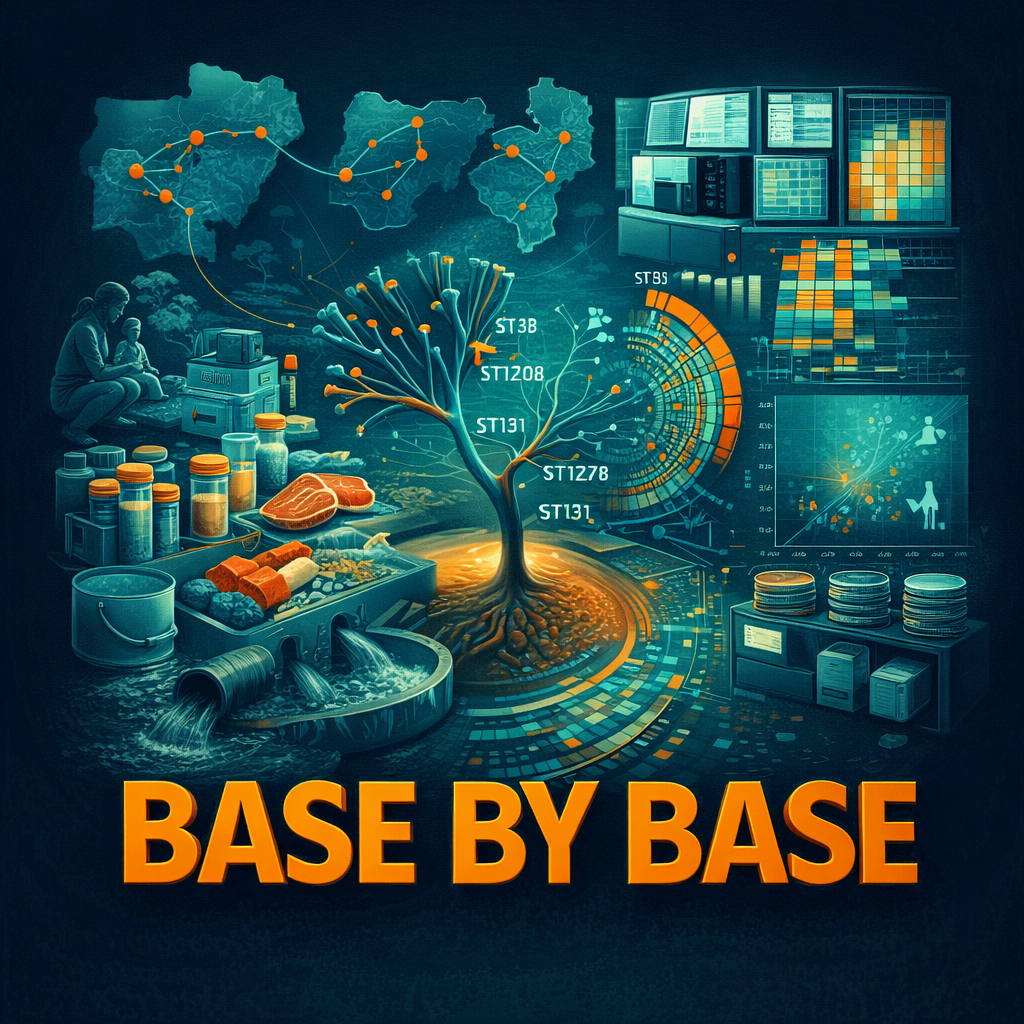
[00:01:27] Speaker B: But there is a potentially transformative solution being tested. This deep dive focuses on a multi country genomic study that really takes this challenge head on. They use two powerful tools, whole genome sequencing and environmental metagenomics to map how pathogens move across four African nations.
[00:01:47] Speaker C: What makes this study a genuine aha moment, I think, is the test it's running. It's asking, can this cutting edge culture independent method, metagenomics, can it actually complement the super high resolution data we get from wgs? Can it give us actionable intelligence for surveillance in these really tough settings?
[00:02:06] Speaker B: It's basically testing a blueprint for the future of infectious disease tracking.
[00:02:10] Speaker C: It is.
[00:02:11] Speaker B: Okay, before we get into the nuts and bolts, we really have to recognize the immense international effort that went into this.
[00:02:16] Speaker C: Oh, absolutely. This study is a testament to global collaboration.
So today we celebrate the work of Cicely Thystrup, Tesvego, Baena, Elsa, Maria, Salvador and I mean, massive team, including collaborators from the Fuqua project.
[00:02:30] Speaker B: Then Foucau stands for, it stands for.
[00:02:33] Speaker C: The foodborne disease Epidemiology, Surveillance and Control in African Low and middle income Countries project.
[00:02:39] Speaker B: Their paper using metagenomics and whole genome sequencing to characterize enteric pathogens across various sources in Africa was published in Nature Communications in 2025.
It really underscores the Power of this kind of collaborative science for sure.
So just to set the Stage for everyone, FBDs in low and middle income countries or LMICs, they're not just an upset stomach, they're a constant, huge drain on public health.
[00:03:05] Speaker C: Yeah. And it's often magnified by, you know, poor infrastructure, lack of sanitation and crucially, surveillance systems that just miss what's circulating in the environment or in rural areas.
[00:03:14] Speaker B: That's the key problem, isn't it? The difficulty of tracking these pathogens across all the different places they live. Humans, animals, food, water, it's what stalls.
[00:03:23] Speaker C: Any real intervention strategy. So the researchers here, they focused on four major culprits behind diarrheal disease in Africa.
Non typhoidal, Salmonella, Campylobacter, pathogenic E. Coli and Shikella.
[00:03:36] Speaker B: So the mission here was really twofold. First, just understand the genetic diversity of these bugs across four different LMICs, Ethiopia, Nigeria, Mozambique and Tanzania.
[00:03:45] Speaker C: Right.
[00:03:46] Speaker B: And second, and this is the big one, to rigorously test if metagenomic sequencing is a practical and useful tool to add to the surveillance toolkit in these environments.
[00:03:56] Speaker C: And the scale of the data collection. It's just astonishing. I mean, they weren't just looking at sick people. From 2019 to 2023, the team collected 3417 samples.
[00:04:07] Speaker B: Wow.
[00:04:07] Speaker C: From 24 different sources.
[00:04:08] Speaker B: 24. So that's everything from the, you know, the expected human samples, diarrhea cases, their caretakers, to livestock like poultry and cattle.
[00:04:16] Speaker C: Food products and the environmental reservoirs, drinking water, waste, raw sewage. It's a true one health approach.
[00:04:22] Speaker B: It really is. And that breadth is so critical when you bring in the two genomic techniques they used.
[00:04:27] Speaker C: Exactly. You have whole genome sequencing, wgs, which is kind of your high resolution telescope, and then you have metagenomics, which is like your wide angle camera.
[00:04:35] Speaker B: Okay, let's break those two down for everyone because how they use them is key here. WGS needs you to first culture the bacteria. Right. You have to grow the pathogen in a lab.
[00:04:45] Speaker C: That's right. They isolated and sequenced 446 bacterial cultures, which gave them 380 high quality genomes to work with. And that gives you that precise genetic fingerprint of one single strain.
[00:04:59] Speaker B: It's like interviewing one suspect and getting their entire life story.
[00:05:03] Speaker C: Perfect analogy. On the other hand, metagenomics is culture independent. They took a completely separate set of 139 really complex samples, think raw sewage or an unfiltered fecal sample, and they sequenced all the DNA in there so.
[00:05:16] Speaker B: You don't grow anything you just sequence the entire microbial neighborhood.
[00:05:19] Speaker C: Exactly. WGS is the suspect. Metagenomics is the census of the whole neighborhood.
[00:05:24] Speaker B: Okay, and this is where the methodology gets really interesting. The WGS isolates and the metagenomic samples, they came from separate buckets, right? They didn't overlap.
[00:05:33] Speaker C: Correct. And that's a super important point. We aren't comparing the two techniques on the same sample from the same sick child. We're comparing the population trends they each capture across the four countries to see.
[00:05:44] Speaker B: If metagenomics can give you a reliable representative view of what's out there. But without all the work of culturing.
[00:05:51] Speaker C: Precisely.
[00:05:52] Speaker B: Okay, let's start with the HI RES WGS findings. Out of those 380 genomes, E. Coli and Salmonella were the most common, which. That makes sense.
[00:06:02] Speaker C: It does. It aligns with the global disease burden. And WGS clearly confirmed the main transmission routes in the region.
The three big hotspots were children with diarrhea, bovine source, Sokoki, cattle and water sources.
[00:06:14] Speaker B: Which confirms this cycle. Right. The bugs are moving between the environment, livestock, and then the most vulnerable people.
[00:06:20] Speaker C: That's the cycle. But when they zoomed in on the genetics, the picture was not the same across the four countries.
[00:06:26] Speaker B: It wasn't uniform.
[00:06:27] Speaker C: Not at all. The genomic heterogeneity was really high. When they predicted the seratites, there was very limited overlap between, say, Ethiopia and.
[00:06:35] Speaker B: Nigeria and Mozambique, which suggests that local factors are everything. It's not one giant regional outbreak.
It's four distinct local battles.
[00:06:45] Speaker C: Yes, each shaped by its own environment, its animal populations, its sanitation. And that completely changes how you would design an intervention.
[00:06:53] Speaker B: Okay, let's get into some specific strains they flagged as concerning. What did they find for E. Coli?
[00:06:58] Speaker C: For e. Coli, finding ST131 and ST38 was a major, major finding. ST131 is globally known as a dominant extraintestinal pathogen. So it causes serious infections outside the gut.
[00:07:12] Speaker B: And it's often highly drunk resistant, right?
[00:07:14] Speaker C: Very often. So finding ST131 and ST38 circulating across different countries and in different sources, including animals and water. That suggests a really pervasive public health threat.
[00:07:24] Speaker B: One that needs immediate attention.
[00:07:26] Speaker C: For sure. They also flagged ST38 because while it's less famous than SD131, it was also in clinical samples and it was carrying virulence genes. Its wide circulation here means it definitely needs to be watched.
[00:07:36] Speaker B: And what about for Salmonella?
[00:07:38] Speaker C: For salmonella, sequence type 1208 or ST1208 was the most Common one they found it popped up most often in Tanzania in sick children and in their drinking water.
[00:07:48] Speaker B: Oh, wow.
[00:07:48] Speaker C: But, and this is critical, they also found it in Nigerian meat samples.
This genomic evidence proves it's widespread, crossing both ecological sources and international borders. It's a priority target.
[00:08:01] Speaker B: Okay, so now let's pivot to that second technique. The wide angle lens of metagenomics. Did the big picture microbial communities line up with what the WGS was telling them?
[00:08:11] Speaker C: They did surprisingly well, even in those messy sewage samples. The analysis showed that the microbes clustered together based on their source.
[00:08:19] Speaker B: Meaning a human sample from Nigeria looked more like a human sample from Ethiopia than it did a sewage sample from Nigeria.
[00:08:26] Speaker C: Exactly. Which confirms that these basic reservoir specific microbial signatures are. Are stable across huge geographic distances.
[00:08:34] Speaker B: That's powerful. It suggests that metagenomic snapshot is actually reliable for telling you where a sample came from. But there was a fascinating trend they found that was tied to a massive global event. Right?
[00:08:44] Speaker C: Yes. This is where that environmental data really shines. In sewage samples collected across all four countries, they saw a really sharp increase in the total amount of FPD pathogens in the year 2021.
[00:08:56] Speaker B: 2021. Right in the middle of the COVID 19 pandemic. So what's the thinking there?
[00:09:00] Speaker C: Well, the timing is probably not a coincidence.
This spike suggests that the socioeconomic impacts of the pandemic, you know, disruptions to sanitation, changes in hygiene practices, may have indirectly caused a surge in these pathogens being shed into the environment.
[00:09:16] Speaker B: It shows how one public health crisis can make another one worse.
[00:09:19] Speaker C: It does. And what's crucial is that the relative mix of the four pathogens stayed the same. It wasn't one bug causing an outbreak, but the whole community of bad bugs just increased together.
[00:09:29] Speaker B: Okay, this brings us to the moment of truth. Could they actually pull high resolution data out of that messy, complex metagenomic soup?
[00:09:37] Speaker C: They could. They absolutely could. Out of all that complex data, the researchers successfully recovered 13 high quality metagenome assembled genomes, or MAGs.
[00:09:46] Speaker B: Thirteen MAGs. So 12 E. Coli and one Campylobacter.
Now, 13 is a small number compared to the hundreds of WGS isolates. But I'm guessing the quality is what matters here.
[00:09:58] Speaker C: It's all about the quality. So they took these 13 recovered mags and put them into the same high resolution phylogenetic analysis as the WGS isolates. And the result was just phenomenal.
[00:10:10] Speaker B: What happened?
[00:10:11] Speaker C: The mags clustered right alongside the WGS isolates from similar sources. A MAG from a diarrheal sample clustered With WGS isolates from other diarrheal cases.
[00:10:20] Speaker B: So the culture independent method actually found genomic patterns that matched the gold standard WGS method.
[00:10:25] Speaker C: That's it. That's the breakthrough. It confirms that metagenomics can work as a viable complementary tool for surveillance.
[00:10:31] Speaker B: So it means we don't always need an expensive lab and weeks of culturing to understand the genetics of the strains that are making people sick.
[00:10:38] Speaker C: Exactly. It offers a powerful, faster and more scalable alternative, Especially where resource limits make traditional culturing almost impossible.
[00:10:46] Speaker B: That sounds incredibly promising, but there were still some big challenges, especially when they tried to place these new genomes into a global context.
[00:10:54] Speaker C: This is a huge systemic problem that this paper highlights so brilliantly.
Many of their isolates and the mangs couldn't be assigned a known sequence type.
[00:11:03] Speaker B: Why not?
[00:11:04] Speaker C: Because the genetic diversity they found suggests that the lineages circulating in these African settings are just massively underrepresented in our global genomic reference databases.
[00:11:14] Speaker B: So if the databases are mostly built on genomes from Europe or North America and your African strains aren't in there, you can't identify them.
[00:11:21] Speaker C: You can't. This database bias limits accurate typing. It limits risk assessment. It's a systemic failure that holds back the power of genomics for everyone. It shows why studies like this are so vital for diversifying our genomic map of the world.
[00:11:35] Speaker B: There was another technical challenge too. Right? With antimicrobial resistance, or AMR genes, they were hard to find in the mags.
[00:11:43] Speaker C: They were. And this is a known limitation of using short read sequencing for metagenomics. You have to think about where AMR genes live. They often hitch a ride on these tiny mobile pieces of DNA called plasmids.
[00:11:57] Speaker B: Right. They're not always on the main chromosome.
[00:11:59] Speaker C: And since short read sequencing chops everything up into tiny little pieces, those little.
[00:12:04] Speaker B: Plasmid pieces get fragmented and lost.
[00:12:06] Speaker C: Exactly. You can reassemble the main bacterial genome, the mag, pretty accurately, but those mobile, fragmented AMR genes are much harder to piece back together correctly. So for tracking the core genome, mags are excellent. But for tracking those high stakes mobile resistance elements, the resolution just isn't there yet compared to sequencing a cultured isolate.
[00:12:27] Speaker B: Okay, so let's step back and look at the big picture. What is the core insight for you that our listeners should take away from this?
[00:12:32] Speaker C: I think the core insight is that by combining the deep detail of wgs with the broad culture free view of metagenomics, this study created a truly unprecedented multi layered surveillance framework. They got definitive evidence for transmission pathways and identified high risk strains, all while proving that this combined method can work in resource limited settings.
[00:12:55] Speaker B: And the success of recovering those mags and seeing them line up with the WGS data, that really makes a strong case that this integrated strategy is the way forward for building better surveillance in LMICs.
[00:13:06] Speaker C: It's a blueprint. It allows public health officials to monitor the environment, get high res data when they can, and most importantly, tailor their interventions to the specific local pathogen populations that are actually circulating in their country.
[00:13:19] Speaker B: Which brings us to our final thought provoking prompt for you.
Given this high geographic diversity of pathogens, but also the success in flagging common environmental sources like water, what does this all mean for prioritizing public health investment?
Should resources target those common reservoirs, upgrading sanitation and drinking water? Or should the main focus be on the global challenge of expanding our foundational genomic databases so we can accurately track what's really out there?
This episode was based on an Open Access article under the CCBY 4.0 license. You can find a direct link to the paper and the license in our episode description. If you enjoyed this, follow or subscribe in your podcast app and leave a five star rating. If you'd like to support our work, use the donation link in the description Now. Stay with us for an original track created especially for this episode and inspired by the article you've just heard about. Thanks for listening and join us next time as we explore more science base by base.
[00:14:25] Speaker A: A glass on the table A bucket in the yard Footsteps through the mud.
[00:14:36] Speaker B: Monkey.
[00:14:39] Speaker A: Evening turning dark invisible Travers.
[00:14:49] Speaker B: Quiet.
[00:14:49] Speaker A: In the stream Riding in the ordinary Hiding in the clean we don't hear the warning till the fever speaks but there are signatures in every little leap if you follow what's written in the lightless code you can see the road Follow the signal thread by thread from hand to water from water bread we draw the lines where the currents run Same river Speaking in a thousand toes we follow the signal, don't let it fade Maps in the dark that we learn to read what we can't see we can still uncover lines across the same water.
Letters in the silence stitched into a spine Patterns in the scatter numbers keep in time A shadow in the sewage A trace in the rain A story in the surface that repeats again Some paths stay constant Some sparks drift far connected by a whisper through through a distant jar not every link is loud not every clue is near but the close card echoes make the picture clear when the genomes lean together like they're sharing bread they point to what's beneath Follow the signal thread by thread from head to water from water to bread we draw the lines where the currents run Same river Speaking in a thousand tones.
Don't let it fade Maps in the dark that we learn to read what we can't see we can still uncover Lines across the same water.
And when the cold when the plate stays still There's a choir in the background Humming against the will A crowded universe in a single drop.
[00:18:16] Speaker B: Not one.
[00:18:17] Speaker A: Voice alone but the whole rooftop so we listen to the noise till it turns to foam Turn the haze to a path Turn the storm to a no follow the same oh.
Follow the signal thread by thread from head to water from water to bread we draw the lines where the currents run Same river Speaking till the work is done Follow the sand go carry it home Build the bridge from the un known what we can't see we can still recover Lines across the same water.
Sam.