Episode Transcript
[00:00:00] Speaker A: Foreign.
Edge of water and stone. UVC poured down where the first.
[00:00:20] Speaker B: Welcome to base by base, the papercast that brings genomics to you wherever you are. Thanks for listening and don't forget to follow and rate us in your podcast app.
[00:00:28] Speaker C: Yeah, thanks for having me.
[00:00:29] Speaker B: Yeah. So today I want you to imagine, if you will, the Earth roughly 4 billion years ago.
It's a completely.
Just an alien landscape.
[00:00:40] Speaker C: Oh, absolutely. Like totally unrecognizable.
[00:00:43] Speaker B: Right. Because there's no protective ozone layer blanketing the atmosphere yet. So the surface is just being absolutely battered by intense unfiltered ultraviolet radiation.
[00:00:55] Speaker C: Yeah, straight from the young sun. It was brutal.
[00:00:57] Speaker B: Just a highly hostile, completely sterilizing environment. And yet somehow, somewhere in those shallow sun baked primordial waters, the very first, you know, molecular foundations of life are taking shape.
[00:01:10] Speaker C: Which is still just wild to think about.
[00:01:12] Speaker B: It really is. And it brings up this incredible central evolutionary paradox because, I mean, we think of DNA as the ultimate biological hard drive.
[00:01:20] Speaker A: Right.
[00:01:20] Speaker B: It's designed to store our most precious genetic information safely across generations.
Yet evolution seemingly chose to build this hard drive using an ingredient that is uniquely vulnerable to science. Sunlight. What really happens when the building blocks of life are forced to act as molecular sunscreens, but evolution selects the exact chemical that burns the fastest. Okay, let's unpack this.
[00:01:44] Speaker C: It truly is a remarkable contradiction when you really start to examine the chemistry of it all. I mean, we are talking about the very building blocks that made life as we know it possible, operating under conditions that, well, they should have by all rights, destroyed them.
[00:01:58] Speaker B: Right, like before they ever had the chance to form complex chains or anything.
[00:02:01] Speaker C: Exactly. It just doesn't seem to make sense on the surface.
[00:02:04] Speaker B: Well, today we celebrate the work of Kivan Khoshabadi, Nigar Karburazar and Peter M. Rancepis at Texas A and M University, who have advanced our understanding of the evolutionary selection of thymine over uracil in early genetic systems.
[00:02:17] Speaker C: Yeah. And to really grasp the magnitude of what this research uncovers, we have to kind of rewind our biological clocks a bit.
[00:02:24] Speaker B: Okay, how far back are we going?
[00:02:26] Speaker C: To what scientists call the RNA world hypothesis.
[00:02:29] Speaker B: Right.
[00:02:29] Speaker C: Which is this widely accepted framework suggesting that long before the familiar double helix of DNA became the, you know, the gold standard for genetic storage, early life relied almost entirely on rna.
[00:02:41] Speaker B: Right. Because RNA is just incredibly versatile. Like it acts as the genetic archive, but it can also fold itself up into these complex three dimensional shapes and it can act like an enzyme, Right, like a ribozyme to actually jumpstart chemical Reactions.
[00:02:54] Speaker C: Exactly.
[00:02:54] Speaker B: So it's essentially the all in one multi tool of early biology.
[00:02:58] Speaker C: Precisely. RNA handled practically everything. Yeah, but as life grew more complex, there was this major evolutionary transition. Life basically shifted the burden of long term data storage from RNA over to DNA. Okay, and structurally, if you look at the molecules side by side, the key difference between those two genetic polymers. Well, aside from a slight change to the sugar backbone.
[00:03:19] Speaker B: Right, the deoxy part.
[00:03:21] Speaker C: Yeah, exactly. The main difference is a single solitary nucleo based swap. So RNA uses a base called uracil, and DNA swaps that uracil out for a base called thymine, which, I mean,
[00:03:31] Speaker B: we normally think of DNA as being the superior storage medium. Right. It's more stable in water, it's less prone to spontaneous breakdown. So upgrading the hard drive makes intuitive sense.
[00:03:42] Speaker C: It makes perfect chemical sense. Yes. Yeah, but photochemically, Meaning? How these specific molecules interact with light. The story completely flips.
[00:03:50] Speaker B: Oh, really?
[00:03:51] Speaker C: Yeah. What's fascinating here is that this molecular swap is. Defies logic from a photostability perspective.
[00:03:58] Speaker B: Wait, how so?
[00:03:59] Speaker C: Well, remember that hostile early Earth we were picturing? The primordial solar radiation was intensely concentrated in the UVC range.
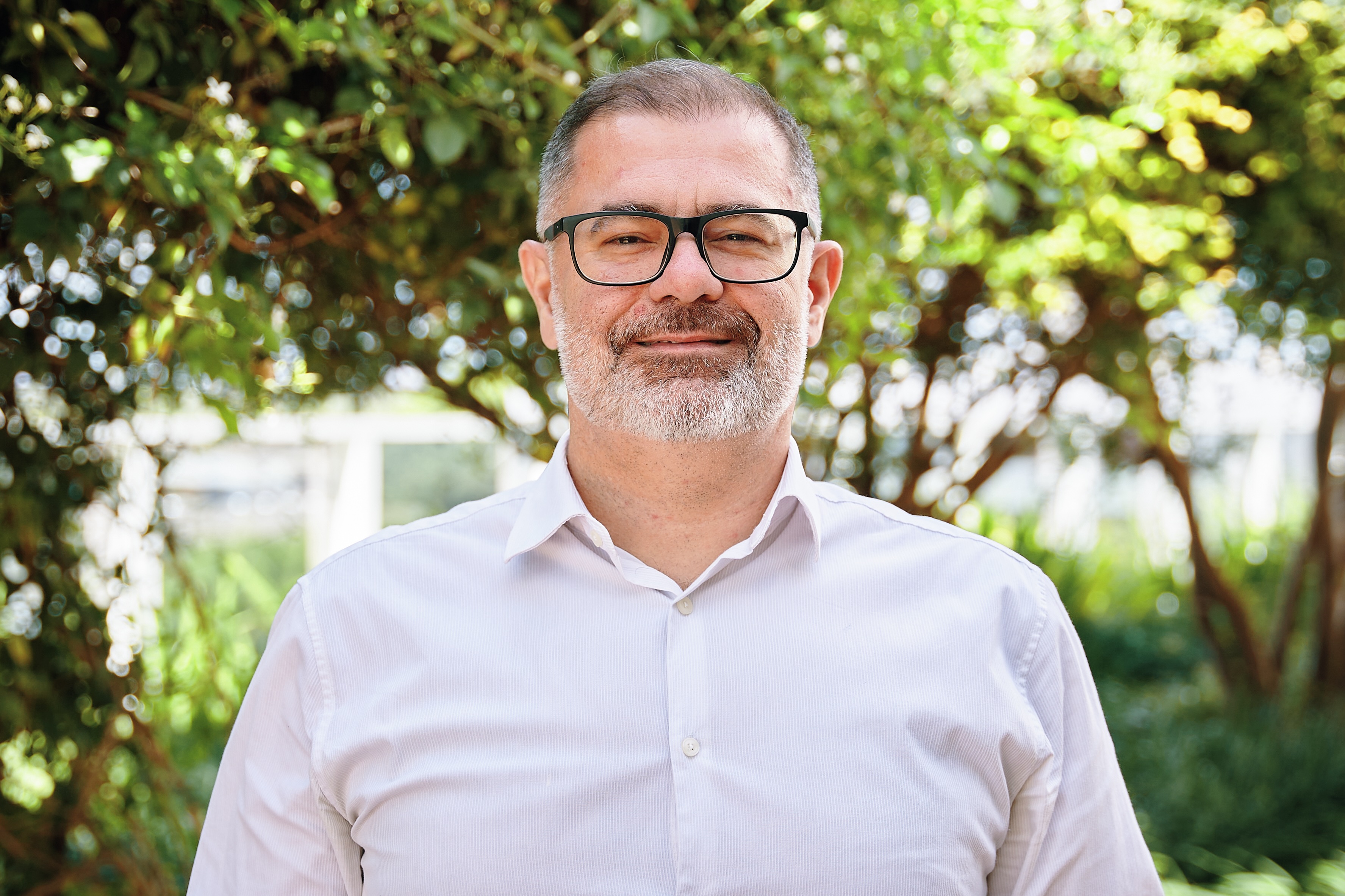
And when you look at the absorption spectrum of thymine, it peaks right. At about 265 nanometers.
[00:04:12] Speaker B: Okay, 205.
[00:04:13] Speaker C: But uracil peaks slightly lower at 259 nanometers. Now that might seem like a trivial difference.
[00:04:18] Speaker B: Yeah, just six nanometers. That doesn't sound like much.
[00:04:21] Speaker C: Right, but at 265 nanometers, the primordial solar intensity was roughly two and a half times higher than it was at 259.
[00:04:27] Speaker B: Oh, wow.
[00:04:28] Speaker C: Yeah. So thymine actually shifted the DNA's absorption peak directly into a much hotter, just way more destructive zone of the sun's rays.
[00:04:36] Speaker B: That sounds like upgrading your phone's protective case to a material that actually attracts drops.
Why would evolution actively select a less stable base in a high radiation environment?
[00:04:48] Speaker C: It seems completely counterintuitive, doesn't it? Like you are placing your most critical genetic blueprints. Right. Right in the crosshairs of the sun's most damaging rays.
And resolving that paradox is exactly what these researchers at Texas A and M set out to do.
[00:05:05] Speaker B: So how do you even test that? I mean, they had to effectively recreate a 4 billion year old high radiation environment right on the lab bench.
[00:05:13] Speaker C: Yeah, which is no small feat.
[00:05:14] Speaker B: Right, because if you're trying to figure out why evolution made this weird choice, you can't just like stick some DNA under a modern commercial Tanning lamp or something?
[00:05:22] Speaker C: Definitely not. No, you have to be incredibly precise
[00:05:24] Speaker B: because there's too much other stuff going on.
[00:05:26] Speaker C: Exactly, exactly. Modern broad spectrum UV lamps would introduce all sorts of messy secondary chemical reactions. You know, they create ozone, they cause oxidation, they create free radicals in the water.
[00:05:37] Speaker B: And those would attack the molecules indirectly.
[00:05:40] Speaker C: Right. And the team needed pristine, highly controlled conditions to isolate just the direct, pure photo damage caused solely by a photon hitting the molecule.
[00:05:51] Speaker B: Okay, so they really stripped it down.
[00:05:53] Speaker C: Yeah, they started with extremely pure aqueous solutions of just thymine and just uracil.
[00:05:59] Speaker B: Just the individual bases in water. I imagine the concentration of that solution matters quite a bit, too. Like, if it's too thick, the molecules on the surface are going to take all the damage and shield the ones at the bottom. Right.
[00:06:11] Speaker C: That is a critical point in spectroscopy.
[00:06:13] Speaker B: Yeah.
[00:06:14] Speaker C: They tuned the concentration perfectly to 130 micromolar.
[00:06:18] Speaker B: 130 micromolar. Okay.
[00:06:20] Speaker C: Yeah. Because in optical physics there is this principle that dictates how light travels through a substance based on its concentration and its thickness. They needed just enough molecules in the water so they could get a strong, measurable signal.
[00:06:32] Speaker B: Right.
[00:06:32] Speaker C: But not so many that the molecules started casting shadows on each other.
By getting the optical density just right, they ensured every single pyrimidine molecule had an equal probability of getting hit by the UV light.
[00:06:44] Speaker B: Okay, so the primordial waters are perfectly calibrated in the test tube. How did they simulate the specific lethal rays of the young sun without all those messy side effects you mentioned?
[00:06:54] Speaker C: They utilized a highly specialized narrowband UVC LED.
[00:06:59] Speaker B: An LED. Okay.
[00:07:00] Speaker C: Yeah. And it emitted light at exactly 265.3 nanometers.
[00:07:05] Speaker A: Wow.
[00:07:05] Speaker B: That is specific.
[00:07:06] Speaker C: Very. And it was set to a constant steady irradiance of 0.6 milliwatts per square centimeter.
This allowed them to perfectly mimic the primordial solar flux without introducing any outside variables. They were hitting the molecules with the exact same kind of energy early life would have faced.
[00:07:24] Speaker B: That's amazing.
[00:07:25] Speaker C: But the real genius of the experiment actually came next. They didn't synthesize long, complex strands of DNA or RNA to test this.
[00:07:32] Speaker B: Oh, they didn't?
[00:07:33] Speaker C: No. Instead, they irradiated the individual free floating bases in a frozen state. They took the temperature down to minus 15 degrees Celsius.
[00:07:41] Speaker B: Wait, if early life formed in warm little ponds, why freeze the samples?
[00:07:45] Speaker C: Right. It sounds like a complete contradiction, but it's actually an ingenious physical trick to solve a structural problem.
[00:07:51] Speaker B: Okay, I'm listening.
[00:07:52] Speaker C: So when you slowly freeze an aqueous solution the water molecules arrange themselves into rigid hexagonal ice crystals.
[00:08:00] Speaker B: Sure.
[00:08:01] Speaker C: And as those pure water crystals grow and expand, they physically push out any impurities or solutes. In this case, the growing ice crystals act like microscopic plows. They are mechanically forcing the thymine and uracil molecules out of the water matrix.
[00:08:16] Speaker B: Oh, I see. It's like getting pushed into a crowded subway car.
All the molecules get corralled together into these highly concentrated microscopic pockets between the ice crystals.
[00:08:26] Speaker C: Exactly that. And because of the shape of the pyramidine molecules, they don't just jumble together randomly. The pressure of the growing ice forces them into incredibly tight face to face stacked geometry.
[00:08:37] Speaker A: Wow.
[00:08:37] Speaker C: Yeah. It brilliantly simulates the close align stacking of an actual nucleic acid strand.
[00:08:43] Speaker B: So they basically forced the bases to line up without having to actually string them together.
[00:08:47] Speaker C: Yes. The bases are forced right up against each other, perfectly positioned for chemical reactions. It provides the perfect physical proxy to study how these bases interact when they are locked in a double helix.
[00:08:58] Speaker B: And they don't need to actually build that fragile sugar phosphate backbone, which might break and mess up the data.
[00:09:05] Speaker C: Exactly. It's incredibly clever.
[00:09:06] Speaker B: Okay, so they have this microscopic molecular trap set up in the ice, and they switch on the primordial UV sun. Since thymine absorbs that specific 265 nanometer wavelength more aggressively than uracil, logic dictates it should be the first casualty. Right. Like it should fall apart faster.
[00:09:24] Speaker C: And the data undeniably confirms that logic.
[00:09:27] Speaker B: Really?
[00:09:27] Speaker C: Yeah. They monitor the samples using steady state absorption spectroscopy.
[00:09:32] Speaker B: Which is what exactly?
[00:09:33] Speaker C: It essentially counts how many intact double bonds are left in the molecules over time.
And thymine is indeed significantly more photoreactive. Its overall decay rate was nearly triple that of uracil under the exact same UV bombardment.
The decay rate for thymine was 0.174 inverse minutes.
[00:09:52] Speaker B: Okay.
[00:09:53] Speaker C: And for uracil, it was only 0.064.
[00:09:56] Speaker A: Wow.
[00:09:56] Speaker B: So the paradox is completely real then. Thymine absorbs more radiation and it burns three times faster.
[00:10:01] Speaker C: It does. It absolutely does.
But the researchers didn't stop at absorption. They also looked at fluorescence.
[00:10:08] Speaker B: Okay. Like how things glow in the dark.
[00:10:10] Speaker C: Kind of, yeah. When a molecule absorbs a UV photon, that massive injection of energy bumps an electron up into a higher orbit. We call this the excited state. And it's highly unstable. If the molecule doesn't immediately react with something else, the electron eventually falls back down to its normal orbit. And when it does that, it releases that stored energy as a longer wavelength of light.
Basically a glow or fluorescence Oh, I get it.
[00:10:38] Speaker B: And since they are monitoring this glow, they can tell exactly what the molecule is doing with the energy before it decays.
[00:10:44] Speaker C: Exactly. The fluorescence data show that cyanine glows about four and a half times brighter than uracil.
[00:10:49] Speaker B: Four and a half times?
[00:10:50] Speaker C: Yeah. And furthermore, it featured a significantly larger Stokes shift.
[00:10:54] Speaker B: A Stokes shift? What does that mean?
[00:10:56] Speaker C: The Stokes shift tells us how much energy the molecule loses to physical vibrations before it finally releases the rest of the energy as light.
[00:11:03] Speaker B: Oh, okay, so the thymine molecule is literally jiggling and vibrating more, shedding some of that lethal UV energy as harmless physical movement or heat, before it flashes the rest away as light.
[00:11:15] Speaker C: Yes, that's exactly what's happening. And it also has a much narrower emission bandwidth.
All of these clues point to a very specific physical reality.
[00:11:27] Speaker B: Here's where it gets really interesting. If the thymine is glowing brighter and vibrating more before it glows, that means the electron is getting stuck up there, doesn't it? Like it's spending significantly more time in that highly energized, excited state before calming down.
[00:11:41] Speaker C: That is the crucial mechanism at play here. The researchers explained that thymine possesses a potential energy barrier on its excited state surface.
[00:11:49] Speaker B: An energy barrier.
[00:11:50] Speaker C: Right. Normally, a molecule wants to dump excess energy as quickly as possible. It summons it rapidly back down to the ground state. But this energy barrier acts like a molecular speed bump. It effectively traps the thymine molecule in the excited state. It physically cannot immediately dump the energy.
[00:12:06] Speaker B: So the thiamine is just sitting there, highly reactive, holding onto this massive payload of UV energy.
And because they are packed shoulder to shoulder in the ice, like in that subway car, it's inevitable that it's going to crash into its neighbor.
[00:12:20] Speaker C: The collision is completely inevitable. It gives the molecule vastly more time to interact with an adjacent base.
Plus, thymine has this extra methyl group, right?
[00:12:31] Speaker B: A methyl group?
[00:12:31] Speaker C: Yeah. It's a cluster of one carbon and three hydrogen atoms that uracil lacks.
And this methyl group helps the thymine molecules stack even more neatly and tightly together through physical interactions.
[00:12:44] Speaker B: So they're even closer together than they would be otherwise.
[00:12:46] Speaker C: Exactly. So you have a highly energized molecule trapped in a reactive state, positioned perfectly next to a neighbor.
[00:12:53] Speaker B: So it basically destined to react when the energy forces them to collide and chemically bond with each other. What kind of damage is actually happening?
[00:13:00] Speaker C: Well, there are two primary pathways for UV damage when adjacent pyrimidines react.
[00:13:05] Speaker B: Okay.
[00:13:06] Speaker C: The first is called a cyclobutane pyrimidine dimer, or A cpd.
[00:13:09] Speaker B: Cpd. Got it.
[00:13:11] Speaker C: In a cpd, two adjacent double bonds, you know, one on each molecule, they essentially snap open and reach across to each other.
[00:13:18] Speaker A: Oh, okay.
[00:13:18] Speaker C: Yeah. And they form this neat, symmetrical four sided ring that links the two bases together.
[00:13:24] Speaker B: So they just lock hands?
[00:13:26] Speaker C: Pretty much.
But the second pathway creates what's called a six, four photo product.
[00:13:30] Speaker B: A six, four photo product?
[00:13:32] Speaker C: Yeah. And this is a much messier reaction. It forms an unstable intermediate structure that completely rearranges the atoms, permanently mangling the two bases into an irreversible tangle.
[00:13:43] Speaker A: Oof.
[00:13:45] Speaker B: So one is a neat symmetrical link and the other is just a complete structural collapse.
[00:13:49] Speaker C: Exactly. And this leads to the core insight of the entire deep dive uracil. When it gets excited and reacts, it tends to form Those messy, irreversible 6, 4 photo products at a significantly higher rate.
[00:14:01] Speaker B: But thymine is different.
[00:14:03] Speaker C: Yes. Thymine, however, has that extra methyl group, and in chemistry we talk about steric bulk.
[00:14:08] Speaker B: Steric bulk, meaning what? Just physical crowdedness?
[00:14:11] Speaker C: Yeah, essentially just physical crowdedness. That methyl group acts like a physical bumper. It literally gets in the way of forming that messy 6, 4 connection.
It uses its physical presence to direct the incoming UV energy primarily into the neat, symmetrical CPD pathway.
[00:14:28] Speaker B: Oh, wow. So thymine is like the crumple zone in a modern car. It's actually designed to take the hit and crumple in a very specific, safe way. A way that can just be popped back out rather than shattering irreparably like older, stiffer materials.
[00:14:41] Speaker C: That analogy perfectly captures the mechanism. Honestly, the definitive difference between these two types of damage is reversibility.
The 6, 4 photo products that Uracil forms are largely irreversible. Right.
[00:14:52] Speaker B: They're mangled.
[00:14:53] Speaker C: Yeah. Once that molecular shattering happens, the genetic sequence is permanently scarred and it cannot be read. But CBD lesions, those neat rings that thymine preferentially forms thanks to its methyl bumper, they are highly reversible.
[00:15:06] Speaker B: Oh, really?
[00:15:07] Speaker C: Yeah. They are incredibly amenable to non enzymatic self repair.
[00:15:10] Speaker B: Wait, non enzymatic meaning? They don't need any complex biological machinery or proteins to come along and fix the damage. It fixes itself just using the laws of physics.
[00:15:21] Speaker C: It has to. I mean, in the prebiotic world, there were no sophisticated protein enzymes patrolling the DNA to make repairs, Right?
[00:15:28] Speaker B: Life hadn't invented those yet.
[00:15:29] Speaker C: Exactly. The genetic molecules had to rely entirely on inherent chemical properties.
If we connect this to the bigger picture, early life utilized the very same intense UV C light that caused the CPD damage to actually drive the lesion self Reversal.
[00:15:46] Speaker B: The same light?
[00:15:47] Speaker C: The exact same light. The system reaches a dynamic equilibrium which chemists call a photostationary state.
[00:15:53] Speaker B: Okay, so what does that look like in practice?
[00:15:55] Speaker C: Well, the intense UV light is constantly slamming into the DNA.
[00:15:57] Speaker B: Right.
[00:15:58] Speaker C: It's like snapping those double bonds open to create the dimer.
[00:16:00] Speaker B: The crumple zones.
[00:16:01] Speaker C: Right, but simultaneously, that exact same UV light is hitting the dimers, providing the energy needed to pop the crumple zone back out. It breaks the four sided ring and returns the bases to healthy monomers.
[00:16:12] Speaker B: That is incredible. It's literally a solar powered self healing mechanism. It's not trying to build an impenetrable wall against the UV light. It's actively absorbing the energy, shifting into a harmless locked state, and then using the ambient light to unlock itself.
[00:16:28] Speaker C: Yes, and this provides immense support for the molecular sunscreen hypothesis.
The prevailing wisdom now is that these nucleobases didn't evolve to avoid taking damage. They evolved to act as molecular antennas.
[00:16:40] Speaker B: Antennas.
[00:16:41] Speaker C: Yeah. Intentionally absorbing the UV hit to protect a much more vital component. The highly fragile sugar phosphate backbone.
Because if a UV photon bypassed the bases and hit the backbone directly, it would cause a complete strand break. The entire DNA polymer would snap in half. Which is an immediate catastrophic failure.
Completely. So by intentionally absorbing the hit, thymine localizes the damage into a reversible CPD crumple zone. It effectively shields the backbone and keeps the chain intact.
[00:17:09] Speaker B: That completely flips the narrative of evolution on early Earth. Thymine wasn't a vulnerability. It was a highly sophisticated compromise. It takes the bullet, but structurally knows exactly how to heal the wound.
[00:17:22] Speaker C: It is a stunning example of chemical optimization.
And it is definitely worth noting that later in evolutionary history, you know, long after the UV threat subsided due to the ozone layer.
[00:17:33] Speaker B: Yeah.
[00:17:33] Speaker C: Thiamine provided a secondary, completely different benefit.
[00:17:37] Speaker B: Oh, what was that?
[00:17:38] Speaker C: Well, as cellular life became more complex, biology discovered a problem with cytosine, which is another major nucleobase.
Cytosine has a tendency to spontaneously degrade. It loses an amine group and chemically transforms straight into uracil.
[00:17:52] Speaker B: Oh. Oh, I see. So if your DNA was naturally made of uracil, the cell repair mechanisms would have no way of knowing if a uracil base was supposed to be there or if it was actually a degraded mutated cytosine. It would be entirely blind to the mutation.
[00:18:05] Speaker C: That's the exact issue. By shifting the entire genetic standard over to thymine, evolution solved the problem. Any uracil found in a DNA strand immediately sticks out as an anomaly. It's a clear error Right. And this allowed later highly complex repair enzymes like uracil DNA glycosylates.
[00:18:22] Speaker A: Like to see.
[00:18:23] Speaker C: Yes, UDG it allow them to instantly spot and snip out the mutagenic uracil.
[00:18:27] Speaker B: That's so smart.
[00:18:28] Speaker C: It is. But as the researchers emphasize, those complex enzymes came much, much later in the timeline. The initial primitive selection pressure to use thymine was almost certainly this non enzymatic photochemical self repair mechanism operating in that harsh sun baked environment.
[00:18:45] Speaker B: Man, it's wild to think about this happening 4 billion years ago. But you know, UV radiation isn't just an ancient threat. We use U UV light on purpose today. Right. Like to sterilize environments and kill pathogens.
[00:18:57] Speaker C: We do.
[00:18:57] Speaker B: Does this ancient survival mechanism ever work against us now?
[00:19:00] Speaker C: It absolutely does. And understanding this deep spectroscopic framework is vital for modern pathogen diagnostics and UV water disinfection systems.
[00:19:09] Speaker B: How so? Like in municipal water treatment.
[00:19:11] Speaker C: Exactly. When municipal water treatment plants process drinking water, they run it past massive banks of UV lights. And that's to inactivate bacteria and viruses. But the critical question is, have we actually shattered the pathogen's DNA irreparably or did we just temporarily stun them by creating those reversible CPD's?
[00:19:31] Speaker B: Oh, right. Because if we just created the reversible crumple zones and then that treated water gets pumped into an open air reservoir,
[00:19:37] Speaker C: exposed to normal sunlight, the pathogens can undergo photoreactivation.
[00:19:40] Speaker B: Oh, no.
[00:19:41] Speaker C: Yeah, they absorb the ambient sunlight, the CPD crumple zones pop back open, the DNA heals, and suddenly the water supply is infectious again.
[00:19:49] Speaker B: That is a major public health concern. So how do we stop that?
[00:19:53] Speaker C: Well, the researchers in this study utilized Rayman spectroscopy to map the exact vibrations of these molecules. And that gives us a potential tool to monitor this in real time.
[00:20:02] Speaker B: Raman spectroscopy. Just so everyone is on the same page, how does Raman actually measure that? Is it looking at the light being absorbed?
[00:20:08] Speaker C: Again, good question.
It's actually looking at scattered light. So when you shine a laser at a molecule, most of the light just bounces off normally.
[00:20:16] Speaker B: Right? Like a mirror.
[00:20:17] Speaker C: Yeah.
[00:20:17] Speaker B: Yeah.
[00:20:17] Speaker C: But a tiny, tiny fraction of the light actually interacts with the physical vibrations of the chemical bonds inside the molecule. And when it does that, it scatters back at a slightly different color.
[00:20:29] Speaker B: Oh, cool.
[00:20:30] Speaker C: Yeah, and by measuring that tiny color shift, we get a highly specific fingerprint of exactly how the atoms are vibrating.
[00:20:37] Speaker A: Wow.
[00:20:38] Speaker C: The researchers mapped these fingerprints flawlessly. For instance, that extra methyl group on thymine, you know, the physical bumper we
[00:20:45] Speaker B: talked about yeah, the one causing the steric bulk.
[00:20:47] Speaker C: Exactly. Has a highly specific vibration signature that shows up as a sharp peak on a Raman spectrum at exactly 1365 inverse centimeters.
[00:20:56] Speaker B: 1365. Okay, so a sensor at a water plant wouldn't need to do complex chemical sequencing or anything like that. It could just bounce a laser through the water, look for the specific physical vibration of that methyl group at 1365, and instantly know whether the sample is dominated by DNA or rna.
[00:21:11] Speaker C: Yes, and it goes even deeper than that. They found the exact vibrational frequencies that correspond to the different types of damage.
[00:21:18] Speaker B: Oh, really?
[00:21:19] Speaker C: Yeah. So when thymine forms a CPD ring, the bonds vibrate differently, creating a new signature.
When uracil forms the Irreversible Tangled 64 photo products, it creates a completely different signature.
[00:21:32] Speaker B: That's amazing.
[00:21:33] Speaker C: It means engineers could potentially deploy handheld Raman spectrometers at water treatment facilities to instantly analyze the ratio of reversible CPD's to irreversible damage.
[00:21:46] Speaker B: So they can be absolutely sure the UV dose is cranked high enough to cause permanent inactivation before the water ever leaves the plant.
[00:21:53] Speaker C: Exactly.
[00:21:53] Speaker B: That is brilliant. I mean, we are measuring the exact same atomic vibrations that protected life from 4 billion years ago and using them to ensure our drinking water is safe today.
Now, to maintain our scientific rigor, we always have to examine the boundaries of a study. What are the limitations of this specific experimental approach?
[00:22:10] Speaker C: Right, so the primary limitation is inherent in the methodology itself. While freezing the pure samples at minus 15 degrees Celsius is a phenomenally clever way to perfectly mimic the structural stacking of a DNA helix. Yeah. It remains a controlled physical proxy. A pure matrix of ice does not capture the chaotic, messy chemical complexity of whole long chain nucleic acid polymers just swimming in actual prebiotic waters.
[00:22:36] Speaker B: Right. The early Earth wasn't a pristine laboratory freezer. There would be fluctuating temperatures, wildly varying ph levels, dissolved iron and minerals all over the place. And those long sugar phosphate backbones naturally flex and twist in the water.
[00:22:50] Speaker C: Exactly. All of those messy environmental factors can subtly influence reaction rates and alter chemical pathways. The frozen matrix proves the fundamental physics and photochemistry of the isolated bases perfectly. It provides this crucial, undeniable baseline.
[00:23:05] Speaker B: The starting point.
[00:23:06] Speaker C: Right. But future research will need to take this baseline and start building the chemical complexity back in, layer by layer, just to see how the local environment might speed up or slow down these inherent properties.
[00:23:15] Speaker A: Properties.
[00:23:15] Speaker B: So what does this all mean?
[00:23:17] Speaker C: Evolution did not select thiamine to perfectly resist ultraviolet light, but rather to safely absorb it as a molecular sunscreen.
By deliberately channeling radiation damage into a specific, easily reversible pathway, thymine allowed early genetic systems to survive and self repair in a harsh primordial world.
What does this mean for our search for life on other planets bathed in intense radiation?
Could they have evolved their own unique chemical crumple zones to protect their alien genetic codes?
[00:23:47] Speaker B: This episode was based on an Open Access article under the CC BY 4.0 license. You can find a direct link to the paper and the license in our episode description. If you enjoyed this, follow or subscribe in your podcast app and leave a five star rating. If you'd like to support our work, use the donation link in the description now. Stay with us for an original track created especially for this episode and inspired by the article you just heard about. Thanks for listening and join us next time as we explore more science Base by base.
[00:24:26] Speaker A: On a cold bright edge of water and stone UVC poured down where the first codes were grown Two letters stood there in the violet light One bruised fast, one broke deep in the night Thy mind flared hard, took the hit, didn't run, your ace will shimmer Then the damage was done A choice in the glare, no enzymes around just physics and patience in the ice packed ground make it bend, don't let it break Turn the wound into a shape you can shake Cyclobutane Close the loop, hold the line in the blast of the sky we learn to self assign from the burn to the repair to the message in time by mine in the dawn Dimers in the dawn.
Absorbance falling like a fast ticking clock Fluorescence rising from a photo product shock some scars fade back some locking for good shadows where CPD's withstood.
Read the ramen whispers bam in a row Signatures telling you what healed, what won't let go A ratio like a warning after lamps go blue will the pathogen recover? Will the damage stay true?
In every bright screen, in every sterilized hall the old ultraviolet lesson echoes through it all make it bend, don't let it break choose the pathway you can unmake Channel the hit to a reversible sign so the code can return so the thread can align from the first frozen nights to the clean room sundy
[00:26:36] Speaker C: mine
[00:26:39] Speaker A: in the dawn dimers in the dark.