Episode Transcript
[00:00:10] Speaker A: In the quiet of the lab, the midnight screens glow bright threads of code and DNA, a fragile filament of light.
[00:00:20] Speaker B: Welcome to Base by Bass, the papercast that brings genomics to you wherever you are. Thanks for listening, and don't forget to follow and rate us in your podcast. Appreciate.
[00:00:29] Speaker C: It's really good to be here. And today feels a little different than our usual deep dives.
[00:00:33] Speaker B: Yeah, it definitely does.
[00:00:34] Speaker C: We usually, you know, we look at a single breakthrough or a new piece of tech, but today we're looking at a timeline. We're looking at an entire era.
[00:00:41] Speaker B: That's right, because, well, it is February 2026, and for the genetics community, specifically those of you working on neuromuscular diseases, this is a huge month.
[00:00:53] Speaker C: It is.
[00:00:53] Speaker B: Professor Dr. Brunhilde Boorth is retiring at the end of the month, and. And there is a farewell symposium happening this Friday to honor her.
[00:01:00] Speaker C: And honestly, honor is the exact right word. If you look at the history of spinal muscular atrophy, or sma, you can basically draw a line before professors work and after.
[00:01:12] Speaker B: I want to set the stakes for everyone listening before we really get into the papers, because 25 years ago, if a child was diagnosed with SMA, type I, the prognosis was just devastating. Yeah, it was the most common genetic cause of infant mortality.
[00:01:25] Speaker C: Exactly. It was essentially a fatal diagnosis. There was no treatment, only palliative care. But today, in 2026, we're living in a world with multiple therapeutic options. We have gene therapies, we have splicing modifiers. The disease has transformed from a sentence into a manageable condition. And that didn't just happen by magic.
[00:01:45] Speaker B: No. It happened because people spent decades staring at gels and sequences.
[00:01:50] Speaker C: Right.
[00:01:50] Speaker B: So our mission today is to walk through that career paper by paper, to understand how we got here. Today we celebrate Professor Brunhilde Wirth at the Institute of Human Genetics, University Hospital, Cologne in Germany, and the many teams and trainees who built this body of work with her.
[00:02:07] Speaker C: And if you want to understand her philosophy, you really have to understand that she was never satisfied with just finding the mutation.
[00:02:13] Speaker B: Right. Finding the typo in the DNA was just step one.
[00:02:15] Speaker C: Exactly. She wanted to know the context. Like, why does one child with a mutation get sick immediately while another child with the exact same mutation might be walking around?
[00:02:24] Speaker B: That is the part that always confuses me about genetics. You tend to think it's binary. You know, you have the bad gene, you get the disease.
[00:02:30] Speaker C: Yeah, you'd think so.
[00:02:31] Speaker B: But her career seems to be about proving that it' sit's just not that simple.
[00:02:35] Speaker C: Precisely. It is never just binary.
So let's go back to the beginning. The late 90s. The main gene for SMA, SMN1, had been identified, but the clinical picture was
[00:02:48] Speaker B: incredibly messy because doctors couldn't predict how severe the disease would be. Right.
[00:02:53] Speaker C: We knew patients were missing this gene, but we didn't know why the outcomes were so wildly different.
[00:02:58] Speaker B: Because humans have a backup gene, smn, too.
[00:03:01] Speaker C: Yes. And this brings us to the first major milestone. A 1999 paper in the American Journal of Human Genetics.
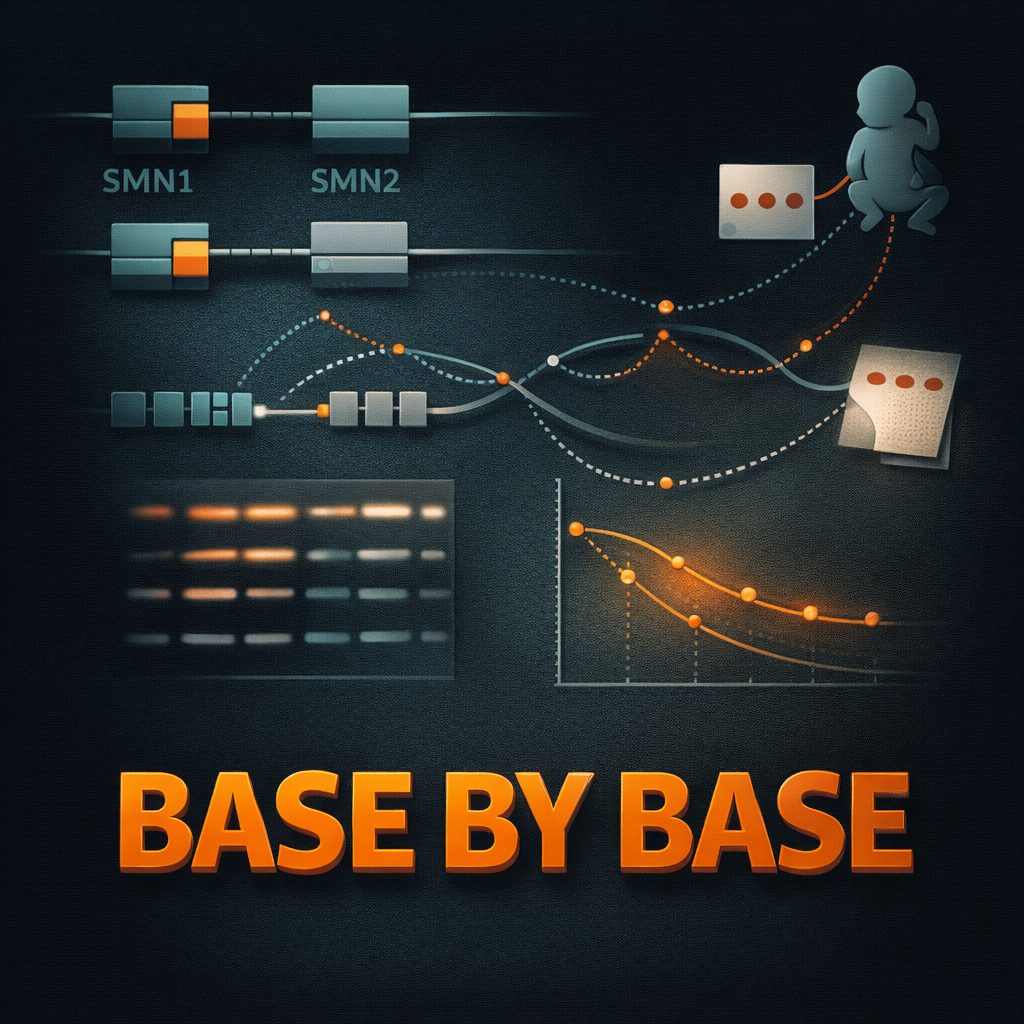
Her team did something crucial here. They didn't just look at whether SMN1 was gone. They looked at the copy number of the backup gene and SMN2.
[00:03:16] Speaker B: So let's unpack this for a second. We have a backup gene. Usually a backup works. Right? Like, if my main hard drive fails, my external drive takes over. Why doesn't SMN2 just save the day?
[00:03:25] Speaker C: Well, that is the core problem of SMA. SMN2 is almost identical to SMN1, but not quite. It produces a little bit of functional protein, but mostly garbage.
[00:03:35] Speaker B: Just garbage protein?
[00:03:36] Speaker C: Yeah. But Wirth's team showed that the number of these backup copies determines the severity. It's a dosage effect.
[00:03:43] Speaker B: So if I have one backup generator that works at 10% capacity, you're in trouble. Right. If I have four of them, you
[00:03:49] Speaker C: might have enough power to keep the lights on. That's exactly it.
[00:03:52] Speaker B: Gotcha.
[00:03:52] Speaker C: They showed that patients with two copies of SMN2 usually had type I SMA, the most severe form. But patients with three or four copies had type 3, which is much milder.
[00:04:03] Speaker B: They proved the backup could modify the disease.
[00:04:06] Speaker C: Exactly.
[00:04:06] Speaker B: But why is the backup faulty in the first place? If it's almost identical, what is actually breaking it?
[00:04:12] Speaker C: That is the subject of the second 1999 paper published in PNAS with Christian Larson. And this is one of those discoveries that is so specific, yet so monumental.
[00:04:21] Speaker B: Okay.
[00:04:21] Speaker C: They found the exact reason SMN2 fails. And it wasn't a missing chunk of DNA. It wasn't a shattered chromosome.
[00:04:28] Speaker B: So what was it?
[00:04:29] Speaker C: It was a single nucleotide.
[00:04:30] Speaker B: Wait, really?
[00:04:31] Speaker C: A single letter change in EXON7 of the gene. There's a C in the healthy version. In the backup version, it's a T.
[00:04:37] Speaker B: T. Just a C to a T. That's it.
[00:04:39] Speaker C: That is literally it. That single transition disrupts what we call a splicing enhancer. Think of a splicing enhancer as a green light for the cellular machinery.
[00:04:49] Speaker B: Okay. A green light?
[00:04:50] Speaker C: Yeah, when the cell is reading the DNA and stitching the protein instructions together.
That C tells the Machinery, hey, include Exon 7. This is important. And the T. The T turns the light red. The machinery skips Exon 7.
[00:05:03] Speaker B: Oh, wow.
[00:05:04] Speaker C: So you end up with a protein that is too short and unstable. It just degrades rapidly.
[00:05:08] Speaker B: It is wild to think that one single letter is the difference between a healthy motor neuron and a degenerating one.
[00:05:13] Speaker C: It's terrifying, honestly, but also hopeful. Because once Worth and her colleagues identified that specific splicing error, they defined the target.
[00:05:22] Speaker B: Right. Because if you know the exact error,
[00:05:24] Speaker C: you can aim at it. If you could create a drug that masked that T or convinced the Machinery to include Exon 7 anyway, you could cure the disease.
[00:05:32] Speaker B: And that's exactly what modern drugs do. They fix the splicing.
[00:05:35] Speaker C: Exactly. This 1999 paper laid the biological groundwork for the splice switching oligonucleotides used in clinics today.
[00:05:44] Speaker B: It moved the goalposts from we don't know what's wrong to we know exactly which nucleotide to target.
[00:05:50] Speaker C: Correct.
[00:05:51] Speaker B: So by the early 2000s, we know copy number matters. We know why the gene is broken. But I imagine there is a totally practical problem here. How do you actually count these copies in a patient?
[00:06:02] Speaker C: That was a huge bottleneck. At the time, counting gene copies was super labor intensive. It involved radioactive blots. It was slow.
[00:06:10] Speaker B: And not something you can just run on every single newborn.
[00:06:13] Speaker C: No, definitely not. It wasn't precise enough for a quick clinical diagnosis.
[00:06:16] Speaker B: Which brings us to 2002.
[00:06:18] Speaker C: Yes, this is where the translation from bench to bedside really happens. Wirth's team, led by Marcus Wildcutter, published a paper in the American Journal of Human Genetics describing a new assay using the Lightcycler.
[00:06:31] Speaker B: Lightcycler sounds cool, but I assume it's basically a high speed PCR machine.
[00:06:35] Speaker C: Essentially, yes.
But the innovation was in the speed and the accuracy. They developed a real time PCR method that could distinguish between SMN1 and SMN2,
[00:06:46] Speaker B: which is hard because they're nearly identical.
[00:06:49] Speaker C: Exactly. And it could quantify exactly how many copies were there.
[00:06:52] Speaker B: So instead of a week of lab work, a doctor gets an answer fast.
[00:06:57] Speaker C: Fast enough to make actual clinical decisions. And around the same time, Matthew Mailman and the team published in Genetics and Medicine about the complexity of carrier testing. They showed that knowing the copy number allowed for predictive medicine. A doctor could look at a newborn and say, this child has two copies. We need to be aggressive. Or this child has four copies. The progression will be slower.
[00:07:18] Speaker B: It turned a Guess into a forecast.
[00:07:21] Speaker C: Yes, and it also helped identify carriers. You know, parents who are healthy but could pass the disease on. They highlighted the tricky 2, 0 carriers.
[00:07:30] Speaker B: Wait, 2 0. What does that mean?
[00:07:32] Speaker C: So, usually we have one copy of a gene on each chromosome, 1, 1, 2. But some people have two copies on one chromosome and 0 on the other.
[00:07:39] Speaker B: Oh, I see.
[00:07:39] Speaker C: Yeah. So if you just run a basic count, they have two copies. They look totally normal, but they can pass that zero chromosome to their child.
[00:07:46] Speaker B: That is incredibly devious of biology.
[00:07:49] Speaker C: It really is.
And identifying those nuances changed genetic counseling for thousands of families. It meant we could give accurate risks to parents.
[00:07:57] Speaker B: Okay, so we have the foundation, we have the diagnosis tools. But my favorite part of this story, and I think the most mysterious part, is what you call the discordant families.
[00:08:06] Speaker C: This is really where her scientific intuition shines, because we just established the rule. Right. More FMN2 copies means milder disease. That's the rule.
[00:08:14] Speaker B: But in biology, there are always exceptions.
[00:08:16] Speaker C: Always.
Her team found families that broke the rule. Imagine two sisters, both lack the SMN1 gene. Both have exactly three copies of SMN2.
[00:08:26] Speaker B: So genetically, looking at the SMA genes, they are identical.
[00:08:29] Speaker C: They are. So they should both have the same symptoms.
[00:08:32] Speaker B: Right.
[00:08:32] Speaker C: But in these families, one sibling would have typical sma, perhaps using a wheelchair, and the other sibling, completely asymptomatic, running, climbing, living a totally normal life.
[00:08:43] Speaker B: That has to be haunting for a researcher. You're looking at the data, and it just doesn't make any sense. Why is she walking?
[00:08:48] Speaker C: It implies that something else is protecting her. A modifier gene hidden somewhere else in the genome. Her team spent years hunting for these
[00:08:56] Speaker B: factors, and they found one.
[00:08:57] Speaker C: They did. In 2008, in a paper published in Science with Gabriela Orpia, they found the first one, a gene called PLASTIN3.
[00:09:05] Speaker B: PLASTIN3. I'm guessing this has absolutely nothing to do with splicing.
[00:09:09] Speaker C: Nothing at all. And that was the huge breakthrough. Plastin 3 is an actin bundling protein. It's part of the cytoskeleton, you know, the structural scaffolding of the cell.
[00:09:18] Speaker B: Okay, so how does that help sma?
[00:09:20] Speaker C: Well, motor neurons are the longest cells in the body. They need a very stable structure to send signals all the way from your spine to your toes. In sma, low SMN levels cause that structure to weaken.
Worth found that these unaffected siblings simply had naturally higher levels of Plastin 3.
[00:09:38] Speaker B: I see. So if the house is shaking because the foundation is bad, that's the SMN problem. Plastin 3 is like reinforcing the walls so the house stands up anyway.
[00:09:46] Speaker C: That is a perfect analogy. It showed that you could protect the neuron without ever fixing the SMN gene.
[00:09:52] Speaker B: You just strengthened the cytoskeleton.
[00:09:53] Speaker C: Exactly. It opened up a completely new avenue for therapy, looking downstream at the cell biology, not just the genetics.
[00:10:00] Speaker B: And they didn't stop there. They found another one later, right?
[00:10:03] Speaker C: They did. In 2017, with a team including Marcus Riesland, they identified neurocalcin delta, or ncld.
This was in the American Journal of Human Genetics.
[00:10:14] Speaker B: Did it work the same way?
[00:10:15] Speaker C: Actually, it worked differently. With Plastin 3, having more was good. With neurocalcin delta, having less was protective.
[00:10:21] Speaker B: Oh, interesting.
[00:10:22] Speaker C: Yeah. They found that suppressing this gene helped recycle synaptic vesicles, a process called endocytosis.
[00:10:30] Speaker B: Like a balance scale. You can add weight to the good side or take weight off the bad side.
[00:10:34] Speaker C: Precisely.
And this really solidified the idea that SMA isn't just a gene problem. It's a cellular machinery problem involving calcium and recycling.
[00:10:43] Speaker B: And Professor Worth's work mapped that machinery.
[00:10:46] Speaker C: She did.
[00:10:47] Speaker B: So we've covered the mechanisms, the tools and the modifiers. Now we are in the2020s.
SMA is part of newborn screening in many countries now, including Germany and Australia.
[00:10:57] Speaker C: We are catching babies early, which is an absolute triumph.
But as with any massive public health program, you start to see edge cases.
In 2020, she and her colleagues published a massive review summarizing this whole journey.
[00:11:11] Speaker B: I don't have a newer paper.
[00:11:13] Speaker C: Yes. The real capstone, in my opinion, is the very recent paper from just this year. 2026.
[00:11:19] Speaker B: Right. This one addresses a problem I hadn't even thought about. Because we are screening millions of babies, the test looks for the absence of SMN1. It was. If it's gone, the bell rings and we treat right.
[00:11:30] Speaker C: And treatment is serious. Gene therapy is amazing, but it's expensive and carries risks. You do not want to give it to a baby who doesn't need it.
[00:11:38] Speaker B: But wait, if the screening says the gene is missing, don't they need it?
[00:11:41] Speaker C: That is what her team collaborated with colleagues in Australia investigated. They found babies who were flagged by the screening test. Said deletion detected. Okay, but the babies were perfectly healthy. They were not developing sma.
[00:11:52] Speaker B: That sounds impossible.
If the gene is deleted, how are they making the protein?
[00:11:57] Speaker C: This is the aha moment of the 2026 paper. The screening tests look for specific deletions.
Wirth's team sequenced these healthy babies and Found something bizarre.
[00:12:09] Speaker B: What was it?
[00:12:09] Speaker C: They didn't have a total deletion. They had tiny specific deletions offered just four base pairs. And these caused a frameshift.
[00:12:16] Speaker B: Okay, I remember my biology classes. A frame shift is usually a disaster.
[00:12:20] Speaker C: Usually? Yes.
[00:12:20] Speaker B: It shifts the reading frame so all the letters after the dilution are read wrong. The protein should be gibberish.
[00:12:26] Speaker C: A frameshift turns a sentence like the cat sat into hecat sat. It's nonsense.
But in these specific cases, the frameshift occurred in a way that surprisingly resulted in a protein that was still functional.
[00:12:38] Speaker B: Wait, how is that even possible?
[00:12:40] Speaker C: It effectively created a new tail for the protein. But the core working parts of the protein remained intact.
[00:12:46] Speaker B: Oh, wow.
[00:12:47] Speaker C: So the screening test was technically right. There was the deletion, but biologically the baby was fine because this mutant protein could still do the job.
[00:12:55] Speaker B: They called these hallucinated diagnoses, right?
[00:12:58] Speaker C: Yes.
The diagnostic machine hallucinates a disease that just isn't there, that is massive.
[00:13:05] Speaker B: Because if you didn't know that, you would treat that totally healthy child with a heavy duty gene therapy.
[00:13:10] Speaker C: Exactly.
This paper provides the roadmap to distinguish those cases.
It stops us from over treating healthy children.
It is the ultimate protection for the patient.
[00:13:21] Speaker B: It really feels like her career has come full circle. She started by refining the diagnosis to predict who would get sick. And she ended by refining it to predict who was healthy.
[00:13:30] Speaker C: That's a beautiful way to put it. When you look at this stack of papers, a few themes really scream out. First, obviously, is the power of copy number. Right. She showed that how much gene you have is just as important as which gene you have.
[00:13:42] Speaker B: And secondly, the value of the outlier.
[00:13:45] Speaker C: Absolutely. Most scientists hate outliers. They mess up your graphs.
[00:13:49] Speaker B: Yeah, they do.
[00:13:50] Speaker C: But Professor Worth loved them. She saw those discordant families not as errors, but as keys. She knew that if a child was walking when they shouldn't be, nature had found a solution.
[00:14:01] Speaker B: She just had to find what nature did.
[00:14:03] Speaker C: Exactly. That's how we got Plastin 3 and NCLED. And finally, the clinical translation. None of this stayed in a journal.
[00:14:09] Speaker B: The splicing discovery led to therapies.
[00:14:12] Speaker C: The PCR assays went into hospitals. The newborn screening refinement is saving families from unnecessary stress. Literally. Right.
[00:14:21] Speaker B: Now we should also mention that science is a team sport.
[00:14:24] Speaker C: It is. When you read these author lists, you see the same names growing over the years. Riesland, Opria, Feldkutter, Hahnen.
[00:14:32] Speaker B: She didn't just build a data set.
[00:14:34] Speaker C: No, she built a school of thought in Cologne. These people are now leaders in their own right.
[00:14:39] Speaker B: It is a legacy of people as much as papers. Indeed, while Professor Worth is retiring at the end of this month, February 2026, the Farewell Symposium is this Friday. It is going to be a moment to reflect on a career that truly changed the landscape.
[00:14:52] Speaker C: We owe great and many thanks to Professor Worth. She helped decipher the genetic code of SMA and she played a pivotal role in turning what was once a fatal diagnosis into a condition we can manage, treat and really understand.
[00:15:05] Speaker B: It makes you wonder if a four base pair frame shift in SMA can create a functional protein and fool a screening test.
How many other deleted genes out there are actually doing perfectly fine?
[00:15:18] Speaker C: It really makes you question our absolute rules in genetics, doesn't it?
[00:15:21] Speaker B: That certainly does. If you are listening and you want to understand the future of precision medicine, look up that 2026 paper. It is a masterclass in why details matter.
[00:15:30] Speaker C: Absolutely.
[00:15:31] Speaker B: That's it for this deep dive into the career of Prof. Bryn Hilder Wirth. Thanks for listening to bass by bass. We'll see you next time.
[00:15:46] Speaker A: In the quiet of the lab the midnight screens glow bright threads of code and DNA A fragile filament of light A single chance change at the tail can slip right out of sight Whispers through the benches Ask if what we knew was right not every broken sentence gets swept into the dark Some endings linger Folding in a different part we trace the splice we watch the altar beating hard so we test, we map we bring those ley lines into light Turn uncertain notes to answers in the night for newborns and the family waiting for a sign we validate the story Stitch the science into life.
We run the jails and read the blots the essays speak the truth what predicts actions claim still needs the proof of proof A variant that escapes the rule can shift the frame so steady hands and patient minds Call every change by name it takes a tender kind of care to read what cells design to learn that endings change the plot and meaning redefines we don't stop at the the first guest we follow every
[00:17:24] Speaker C: line
[00:17:28] Speaker A: so we test, we map we bring those late lines into life Turn uncertain loans to answers in the night for families waiting at the dawn for clearer signs to find we validate the stories Teach the science into love.
In the night.
Into life.