Show Notes
Kubat GB et al., Nature Communications - This Perspective surveys recent biotechnological advances that enhance mitochondria transfer and transplantation (MTT) — including surface functionalization, extracellular and engineered vesicles, hydrogels and nanomotors — and evaluates their therapeutic promise and limitations across cardiac, neural and other models. Key terms: mitochondrial transplantation, nanotechnology, extracellular vesicles, delivery systems, therapeutic potential.
Study Highlights:
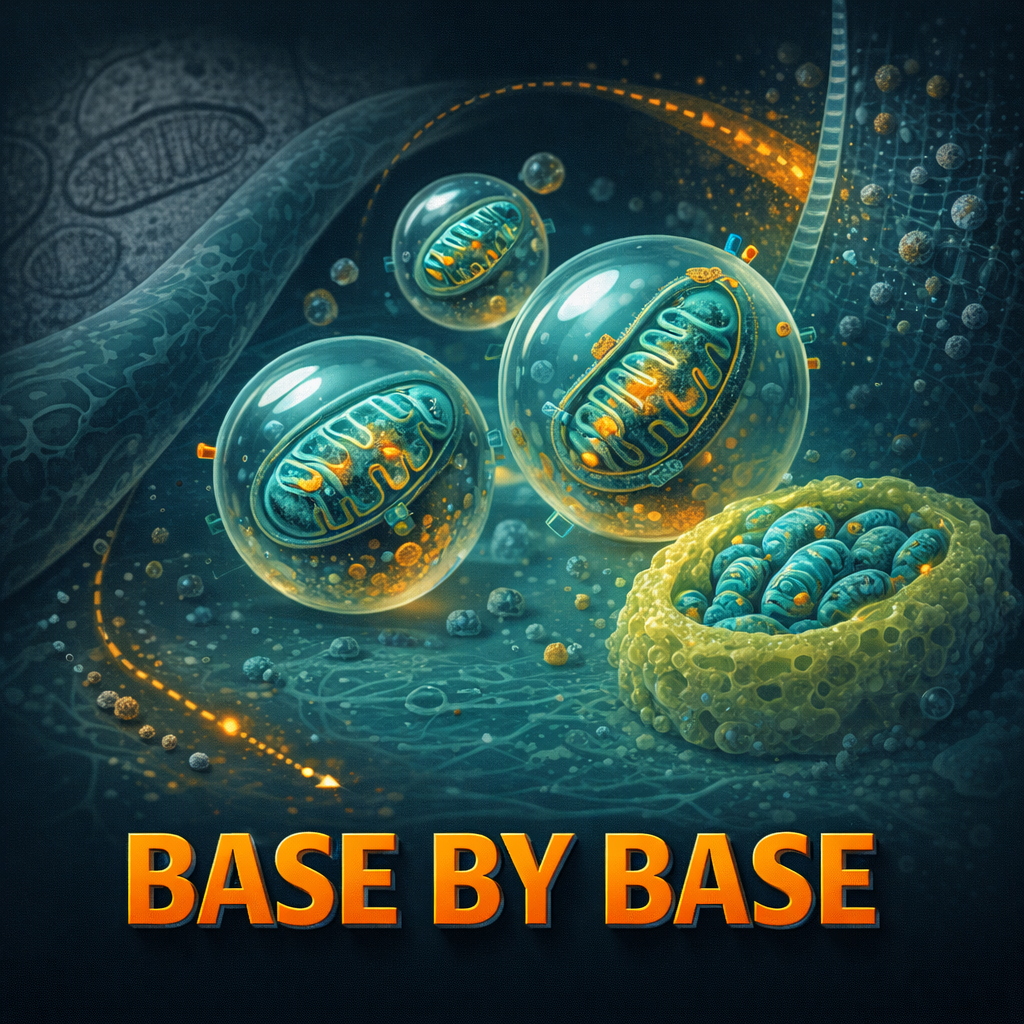
The article reviews delivery strategies (CPPs, TPP/dextran coatings, EVs, liposomes, hydrogels, nanomotors) that increase mitochondrial protection, cellular uptake and tissue targeting in preclinical models. Encapsulation in EVs or lipid bilayers preserves mitochondrial integrity under Ca2+ and oxidative stress and improves functional rescue compared with naked mitochondria. Key translational barriers include immune activation, short post-isolation mitochondrial lifespan, low targeting efficiency across barriers like the BBB, and scalability and regulatory challenges.
Conclusion:
Biotechnology-enabled delivery systems substantially improve MTT efficacy in preclinical settings, but immune, mechanistic, scalability and safety issues must be resolved before routine clinical use.
Music:
Enjoy the music based on this article at the end of the episode.
Article title:
Biotechnological approaches and therapeutic potential of mitochondria transfer and transplantation
First author:
Kubat GB
Journal:
Nature Communications
DOI:
10.1038/s41467-025-61239-6
Reference:
Kubat GB, Picone P, Tuncay E, et al. Biotechnological approaches and therapeutic potential of mitochondria transfer and transplantation. Nature Communications. 2025;16:5709. doi:10.1038/s41467-025-61239-6
License:
This episode is based on an open-access article published under the Creative Commons Attribution 4.0 International License (CC BY 4.0) – https://creativecommons.org/licenses/by/4.0/
Support:
Base by Base – Stripe donations: https://donate.stripe.com/7sY4gz71B2sN3RWac5gEg00
Official website https://basebybase.com
On PaperCast Base by Base you'll discover the latest in genomics, functional genomics, structural genomics, and proteomics.
Episode link: https://basebybase.com/episodes/mitochondria-transfer-transplantation-biotech-potential
QC:
This episode was checked against the original article PDF and publication metadata for the episode release published on 2025-08-03.
QC Scope:
- article metadata and core scientific claims from the narration
- excludes analogies, intro/outro, and music
- transcript coverage: Audited the transcript’s sections describing mitochondrial transfer strategies and barriers, including surface modification, extracellular and engineered vesicles, hydrogels, and oral nanomotorized mitochondria, plus BBB/clinical translation considerations.
- transcript topics: Barriers to mitochondrial transplantation (immune recognition, extracellular hostile environment, barriers like the BBB); Surface modification strategies (CPPs; Pep-1; TAT-dextran; Dex-TPP coatings); Natural and engineered extracellular vesicles as delivery vehicles (EVs, AM-Mito, liposomes, synaptosomes, FMCs); Hydrogels and other local delivery systems (PF127 hydrogel, xyloglucan, alginate-based hydrogels); Oral nanomotorized mitochondria (CM/NM/Mito@Cap) and targeted cardiac delivery; BBB crossing challenges and systemic delivery limitations
QC Summary:
- factual score: 10/10
- metadata score: 10/10
- supported core claims: 7
- claims flagged for review: 0
- metadata checks passed: 4
- metadata issues found: 0
Metadata Audited:
- article_doi
- article_title
- article_journal
- license
Factual Items Audited:
- Delivery strategies summarized: surface modification, extracellular vesicles, engineered vesicles, hydrogels, and oral nanomotors
- Exogenous mitochondria can fuse with host mitochondrial networks or be degraded via lysosomal pathways
- Oral nanomotorized mitochondria achieved ~7.9% cardiac tissue delivery versus ~1.0% for non-motorized controls
- Pep-1 and TAT-based surface modifications increase uptake; Dex-TPP coating reduces negative surface charge and enhances internalization
- AM-Mito encapsulation efficiency reported as ~86% with higher neuronal uptake
- EV encapsulation preserves mitochondrial function under Ca2+ and ROS stress for up to ~24 hours
QC result: Pass.