Episode Transcript
[00:00:13] Speaker A: I dropped into a crowded oxygen low night.
[00:00:20] Speaker B: Welcome to Bass by Bass, the papercast that brings genomics to you wherever you are. Thanks for listening and don't forget to follow and rate us in your podcast. Appreciate. So imagine for a second that you just took a sip of water. Or, you know, maybe you just took a bite of an apple.
[00:00:34] Speaker C: Right, Something we do every single day.
[00:00:36] Speaker B: Exactly. And along with that bite, you just swallowed thousands, maybe millions of microscopic living bacteria. And right at this very moment, they are traveling down into your digestive tract.
[00:00:49] Speaker C: Yeah, it's a little unsettling when you really think about it.
[00:00:51] Speaker B: It really is. But here is the central mystery for today's deep dive.
Why don't all of those bacteria just move in and set up shop? Think about your own body for a second. What actually determines whether a newly arriving bacterium successfully colonizes your gut or if it gets just immediately evicted?
[00:01:10] Speaker C: It is a phenomenal question, and it really gets to the heart of this invisible battleground happening inside every single one of us, because, well, we know that every person listening to this right now has a completely unique guy Gut microbiome.
[00:01:23] Speaker B: Right. It's like a fingerprint, right?
[00:01:25] Speaker C: Exactly like a fingerprint. The community of bacteria living inside you is completely distinct and personal to you.
[00:01:32] Speaker B: But does that extreme individuality actually change how our specific bodies handle incoming invaders? I mean, if my gut is totally different from yours, do we process new microbes differently?
[00:01:44] Speaker C: That's the big question. And it fundamentally reshapes how we view our own biology, really.
We tend to think of our immune system, you know, our white blood cells and antibodies as our only line of defense.
[00:01:54] Speaker B: Right, the traditional immune response.
[00:01:56] Speaker C: Yeah. But what we are finding is that your resident bacteria are actively policing their own environment.
They are. They're the first responders.
[00:02:04] Speaker B: Today we celebrate the work of Mathilde Boumismood and a brilliant team of researchers at ETH Zurich and partner institutions who have advanced our understanding of interspecies interactions in the gut microbiome. We're going to explore exactly how your specific bacterial ecosystem controls who gets to live there.
[00:02:22] Speaker C: Just such an elegant piece of research.
[00:02:24] Speaker B: It really is. And we are going to reveal how one nearly invisible, stealthy microbe might actually hold the master control switch for your entire internal ecosystem.
So to do this, we're looking at a fascinating 2026 research article published in PNS. That's the proceedings of the National Academy
[00:02:43] Speaker C: of Sciences, a top tier journal, definitely.
[00:02:46] Speaker B: And the paper is titled Interspecies Interaction Controls Escaritia Coli Growth in Human Gut Microbiome. Samples.
Okay, let's unpack this. We are looking at incoming bacteria trying to colonize a gut that is already occupied. But I mean, you can't exactly just look inside a living human's stomach to watch this happen in real time.
[00:03:04] Speaker C: No, definitely not.
[00:03:05] Speaker B: So how did the researchers actually set up a test for this?
[00:03:08] Speaker C: Well, you're right. Studying the living gut directly is incredibly difficult, mainly because it's a dark, oxygen free environment. Right. And the moment you expose it to air, a lot of those critical bacteria just die.
[00:03:18] Speaker B: Oh, wow. Because oxygen is toxic to them.
[00:03:21] Speaker C: Exactly. So the researchers needed to bring the staggering complexity of the human gut into a highly controlled laboratory setting.
To do this, they started by collecting stool samples from six different healthy human donors.
[00:03:34] Speaker B: Okay.
[00:03:35] Speaker C: And in the study, they label these donors M2 through M7.
[00:03:38] Speaker B: So they basically have six. Six distinct microbial fingerprints to work with.
[00:03:43] Speaker C: Correct. And working inside anaerobic chambers, which are these specialized, completely oxygen free, sealed boxes, they created what are called anaerobic microcosms.
[00:03:52] Speaker B: Anaerobic microcosms.
[00:03:53] Speaker C: Right. They essentially took the living, breathing microbial community from each donor and resuspended it in a nutrient rich liquid base.
[00:04:00] Speaker B: So it's basically a miniaturized living version of that person's gut. Just like inside a test tube.
[00:04:06] Speaker C: That is a great way to think about it. It maintains the complex social network of the microbes. So once they had these six distinct microcosms running, they introduced new arrivals.
[00:04:15] Speaker B: The invaders.
[00:04:16] Speaker C: Exactly. They used six different strains of Escriach. E. Coli.
[00:04:21] Speaker B: Now, wait, when most people hear E. Coli, they immediately think of, like, terrible food poisoning or those huge lettuce recalls. But that's not the whole story with this bacteria, is it?
[00:04:32] Speaker C: No, not at all.
Certain pathogenic strains make the news, sure, but E. Coli is actually a very common, perfectly normal resident in almost everyone's gut. It usually makes up a very small proportion of our healthy microbiota.
[00:04:45] Speaker B: Okay, that makes sense. So they add E. Coli. But if you just drop E. Coli into a gut that already has its own E. Coli living there, how do you tell the new guys from the locals?
[00:04:54] Speaker C: Right. Because genetically, they look incredibly similar.
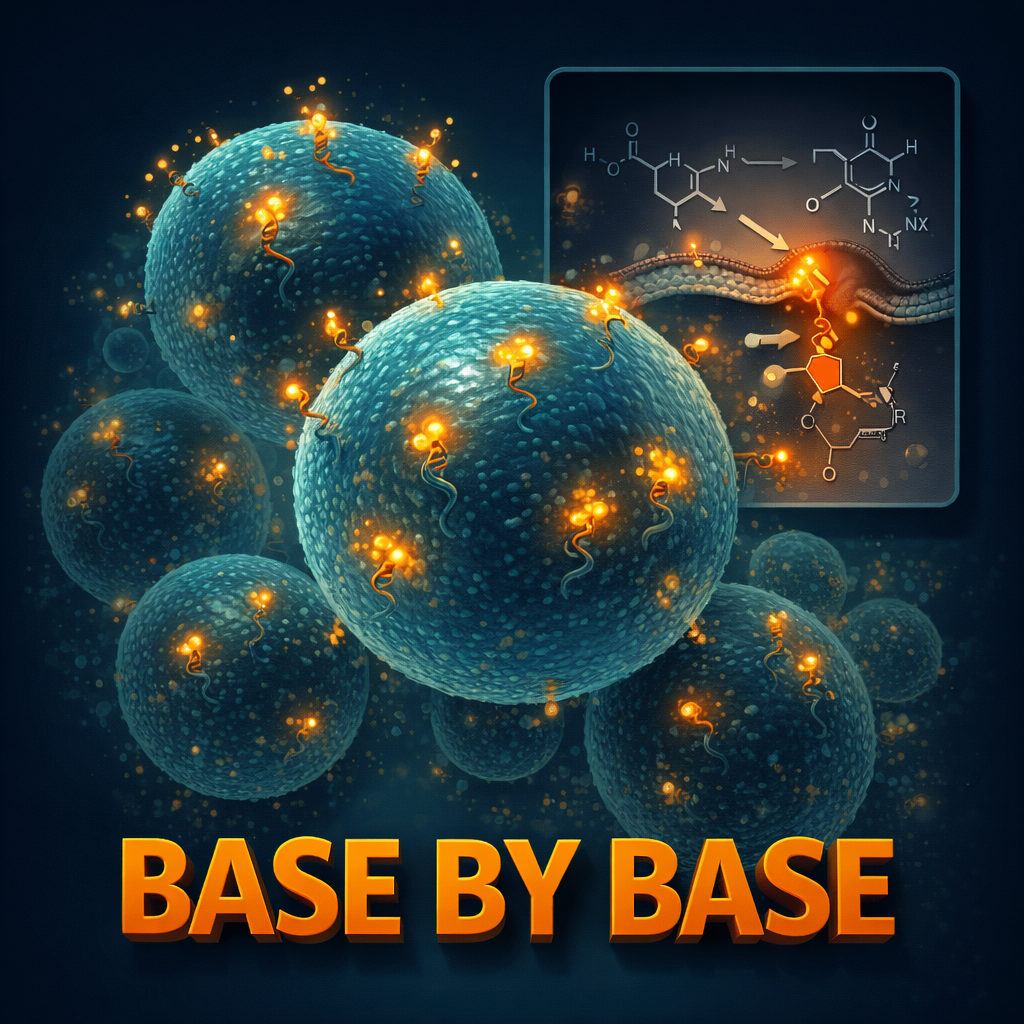
So they gave the incoming strains a genetic tag. Specifically, they inserted a tiny loop of DNA called a plasmid.
[00:05:04] Speaker B: Okay, what did the plasmid do?
[00:05:06] Speaker C: It gave the incoming bacteria resistance to an antibiotic called chloramphenicol.
[00:05:12] Speaker B: Oh, clever. So it's like equipping the new bacteria with a specific molecular shield.
[00:05:16] Speaker C: That's a perfect analogy. Later, the researchers could just count the new arrivals by exposing the sample to that antibiotic, only the tagged newcomers would survive to be counted.
[00:05:25] Speaker B: That is a brilliant way to track them. So they drop these six tagged strains into the six different microcosms. And what did they find?
[00:05:35] Speaker C: They found that the gut has a really strict limit on how much E. Coli it will tolerate.
The paper calls it a microbiome specific finite abundance.
[00:05:46] Speaker B: A finite abundance. Let me try an analogy here to see if I'm grasping this.
It sounds a bit like a city neighborhood with incredibly strict zoning laws.
[00:05:56] Speaker C: Okay, I like where this is going.
[00:05:57] Speaker B: Right. So imagine a city planner says we only have the infrastructure for exactly 100 houses in this district.
If a developer comes in and wants to build a new house, they can't just build on an empty lot because there are no empty lots.
[00:06:08] Speaker C: Right.
[00:06:09] Speaker B: They literally have to tear down an old house to build a new one. The total number of houses never goes up.
[00:06:14] Speaker C: That is a superb analogy. The incoming E. Coli strains that grew really well did not increase the overall total E. Coli population in that specific microcosm.
[00:06:24] Speaker B: They didn't just add to the population.
[00:06:26] Speaker C: No. Instead, they forcibly displaced the resident E. Coli that were already living there. The total capacity was strictly capped by the environment. Wow. Yeah. It's driven by intense interest. Specific competition. Meaning members of the same species fighting tooth and nail for the exact same ecological niche.
[00:06:44] Speaker B: So if it is all about prime real estate and brutal competition, does a specific strain perform best if it returns to its original neighborhood?
Like.
Like a home field advantage?
[00:06:58] Speaker C: Oh, you mean like local adaptation.
[00:06:59] Speaker B: Yeah. Let's say strain S3 originally came from donor no. 3. Does it automatically dominate when you put it back into Donor 3's microcosm?
[00:07:08] Speaker C: That is exactly what ecologists would call local adaptation. And you would logically assume that to be the case. You would think the bacteria has evolved to perfectly match its specific host.
[00:07:17] Speaker B: Right, because it grew up there.
[00:07:18] Speaker C: But surprisingly, they found absolutely no evidence of it. There was zero home field of damage.
[00:07:23] Speaker B: Really? None. So who won the real estate battles?
[00:07:26] Speaker C: The hierarchy remained generally consistent across all the samples. Strains S3 and S7 were just ruthless competitors everywhere they dominated, no matter whose gut ecosystem you dropped them into.
[00:07:36] Speaker B: How were they doing that? Were they simply growing faster than the other strains? Like they just out reproduce the competition?
[00:07:42] Speaker C: That's the logical next assumption. But the researchers tested that by growing them in a pure isolated broth without the complex microbiome around them.
[00:07:51] Speaker B: Just to test their raw speed.
[00:07:53] Speaker C: Exactly. And S3 and S7 did not have a higher intrinsic growth rate. They weren't naturally faster the researchers also tested if they had a broader diet, maybe they could eat more types of sugars or carbons. Again, no significant advantage.
[00:08:08] Speaker B: Wait, so if they aren't faster and they are better eaters, do they have weapons? I mean, are they actively killing the other E. Coli?
[00:08:16] Speaker C: They actually check for that too. Strains S3 and S7 naturally carry a gene that produces a toxin called colicin E1.
[00:08:23] Speaker B: Oh, a toxin?
[00:08:24] Speaker C: Yeah, it is a protein designed specifically to inhibit other E. Coli.
[00:08:28] Speaker B: So it is chemical warfare. They were literally poisoning the competition to take their real estate.
[00:08:32] Speaker C: It looks that way. On paper and in a simplified lab setting, you know, on a flat agar plate, that toxin works beautifully. But the researchers did a really clever follow up.
[00:08:42] Speaker B: What did they do?
[00:08:43] Speaker C: They took that toxin producing gene and transferred it into one of the weaker E. Coli strains. They wanted to see if giving it the weapon would suddenly turn it into a super competitor in the living complex microcosms.
[00:08:55] Speaker B: Let me guess, it didn't work.
[00:08:57] Speaker C: It did not help at all. The plasmid mediated antagonism, which is the fancy term for using that toxin, wasn't enough to explain dominance in the messy, complex ecological reality of the gut.
[00:09:09] Speaker B: So the toxin is useless in the real world?
[00:09:12] Speaker C: Essentially, yes. The overarching environment of the resident microbiota completely overrides simple single trait advantages like one specific toxin.
[00:09:21] Speaker B: That is a perfect transition into the next massive mystery in this deep dive. Because if strains S3 and S7 are such incredibly dominant competitors, what happens if the whole neighborhood is fundamentally toxic to them? Yes, we've talked about how these specific strains compete with each other for real estate. But now we need to look at how the environment itself pushes back.
This brings us to the bizarre anomaly in the data microbiome. Sample M6.
[00:09:46] Speaker C: Yes, sample M6 is where this study takes a dramatic and fascinating turn.
[00:09:50] Speaker B: In the microcosms made from donor M6, the total amount of bacteria was 50% lower than in all the other samples. And when they counted the final number of those incoming E. Coli strains, it was a staggering six times lower than in the other microcosm.
[00:10:05] Speaker C: There's a massive drop.
[00:10:06] Speaker B: M6 was essentially a hostile wasteland for E. Coli. And the researchers proved it wasn't because there was a lack of food, right?
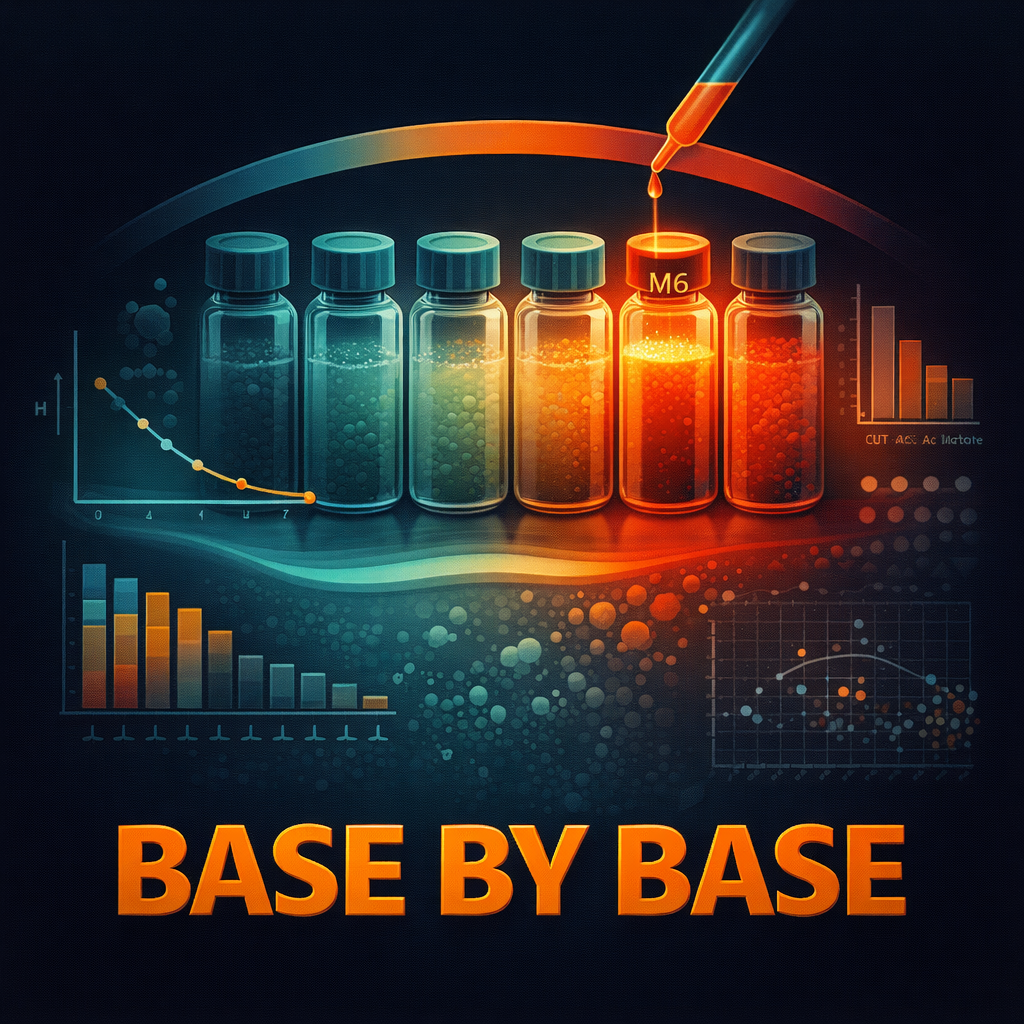
[00:10:13] Speaker C: Correct. They wanted to rule out starvation, so they scerlized the M6 sample. They used heat and pressure to kill all the living resident bacteria, but they left all the chemical nutrients perfectly intact.
[00:10:25] Speaker B: And when they dropped the E. Coli into that dead sterile M6 environment, they grew incredibly well.
[00:10:31] Speaker C: They literally Exploded in population. So the nutrients were absolutely there.
[00:10:35] Speaker B: Okay, so if the E. Coli aren't starving in M6, what exactly is keeping them out? Why is this specific gut environment acting like a fortress?
[00:10:44] Speaker C: What's fascinating here is that it was a different kind of chemical warfare. It wasn't E. Coli fighting E. Coli. The broader living microbial community of M6 was actively altering the physical chemistry of the environment. The researchers tested the fluid and found that the living M6 community had dropped the pH down to 5.4. It became highly acidic.
[00:11:05] Speaker B: Just how sensitive is E. Coli to that? Does A ph of 5.4 really shut down a bacterium that completely?
[00:11:11] Speaker C: Completely. E. Coli has evolved to thrive at a near neutral pH, right around 6.5 to 7.0. At a pH of 5.4, the environment is just flooded with protons.
[00:11:22] Speaker B: And that's bad for them.
[00:11:23] Speaker C: It's terrible for them. For E. Coli to survive, it has to maintain a neutral PH inside its own cell.
So it has to desperately use all of its cells cellular energy to actively pump those invasive protons back out through its membrane.
[00:11:35] Speaker B: Oh, wow. It's like trying to bail water out of a sinking boat with a tiny bucket.
[00:11:39] Speaker C: Exactly. It spends so much energy just staying alive that it has absolutely zero energy left to reproduce or colonize. The acidity literally acts as a biological force field.
[00:11:49] Speaker B: That is incredible. They are exhausted just trying to survive the acid bath. But how did the researchers definitively prove that the acid was the only thing stopping them?
[00:11:57] Speaker C: Well, they took the highly acidic fluid from the M6 microcosms after filtering out all the actual bacteria and confirmed that E. Coli still couldn't grow in it. But then they added sodium hydroxide, which
[00:12:08] Speaker B: is a strong base. They basically gave the environment an antacid.
[00:12:12] Speaker C: Exactly. They artificially neutralized the PH back to a comfortable 7.0. And the moment they did that, the E. Coli instantly woke up and started multiplying rapidly.
[00:12:23] Speaker B: So the acid was the only thing holding them back.
[00:12:25] Speaker C: The acidification was the sole barrier to entry.
[00:12:28] Speaker B: So we know what happened. The M6 neighborhood got heavily acidified, creating this proton pumping energy drain that kept invaders out. But the huge question is, who is pouring the acid? Who was responsible for dropping the ph?
[00:12:41] Speaker C: Right. They had to hunt down the culprit.
[00:12:42] Speaker B: Then how did they do that?
[00:12:43] Speaker C: They systematically screened the M6 microbiome to find the source. They isolated different bacteria, grew them, and analyzed their chemical output.
[00:12:52] Speaker B: Here's where it gets really interesting. They found a specific strain of a spore forming oxygen hating bacterium called Clostridium.
[00:13:00] Speaker C: Butyricum Yes. Clostridium butyricum.
[00:13:03] Speaker B: But the most mind blowing part to me is that the C. Butyricum was a complete stealth microbe. It was basically a ghost.
[00:13:09] Speaker C: It really was. It was incredibly rare in the initial sample. When researchers want to see who is living in a microbiome, they typically use a tool called 16S RRNA genetic sequencing.
[00:13:21] Speaker B: Okay, what is that?
[00:13:22] Speaker C: Think of it like an automated census taker that scans the genetic barcodes of everything in the gut to give you a population breakdown.
[00:13:28] Speaker B: But this microbe slipped past the census taker completely.
[00:13:32] Speaker C: It did. It made up less than 0.01% of the total bacterial load in the M6 sample. It was statistically invisible to standard sequencing.
[00:13:40] Speaker B: Less than 0.01%.
[00:13:42] Speaker C: Barely there. Yet during the 24 hour cultivation period, the lab, it woke up, it bloomed, multiplied rapidly, and its metabolic output was so extreme that it completely hijacked the chemistry of the entire environment.
[00:13:55] Speaker A: Wow.
[00:13:55] Speaker B: You know, earlier I was thinking of it like a stealth ninja, but I want to reframe that because of what you just said. It's not a ninja. It's more like an eccentric billionaire who quietly moves into a single house in a massive city, but then immediately buys up the entire block completely, rewrites the local zoning laws and changes the character of the neighborhood so drastically that that the former residents are practically forced to move out.
[00:14:18] Speaker C: If we connect this to the bigger picture, your billionaire analogy perfectly describes what ecologists call a keystone species.
[00:14:26] Speaker B: Keystone species.
[00:14:27] Speaker C: Right. A keystone is an organism that has a disproportionately massive impact on its environment relative to its actual population size. Even though it started as a ghost, its chemical output dictated the survival of millions of other organisms.
[00:14:41] Speaker B: How exactly does it rewrite the rules of the neighborhood, though? Like, where does the acid actually come from?
[00:14:46] Speaker C: CB Tyricum is a voracious fermenter. It consumes carbohydrates and aggressively pumps out short chain fatty acids as a byproduct. Specifically, it produces huge amounts of butyrate as well as acetate.
[00:14:57] Speaker B: Oh, so the fatty acids are the acid.
[00:14:59] Speaker C: Exactly. The sheer overwhelming volume of these fatty acids being pumped out into the confined space is what drove the ambient ph plummeting down to 5.4.
[00:15:11] Speaker B: It's wild that something totally undetectable to our best scanning tools can pull the strings of the entire ecosystem.
So if this invisible billionaire microbe acts like a master control Switch in donor M6, the obvious question is, can we use it to reprogram other people's microbiomes?
[00:15:28] Speaker C: That's the million dollar question.
[00:15:29] Speaker B: Can we take this microbe from M6 and deploy it into those other vulnerable neighborhoods to protect. Protect them?
[00:15:35] Speaker C: That is the ultimate test, and it is exactly what they did. In the final phase of the study. The researchers took this single naturally occurring strain of C. Butyricum that they isolated, and they transplanted it into the microcosms of the other five donors.
[00:15:47] Speaker B: Okay. And just to remind everyone, donors M2, M3, M4, M5, and M7 originally had a neutral ph and allowed massive, rampant E. Coli growth.
[00:15:55] Speaker C: Correct. They were totally vulnerable.
[00:15:57] Speaker B: And they inoculated them with a very low dose. Right. To mimic the tiny, practically invisible starting abundance. It originally had an M6.
[00:16:04] Speaker C: Yes. They didn't flood the system. They introduced it at low levels and let it do its work.
[00:16:08] Speaker B: And the data is just dramatic. Let's look at the chemistry first. When they added this single microbe, did the ph crash across all those different, highly individual microbiomes?
[00:16:20] Speaker C: It did. The chemistry of these diverse microbiomes uniformly shifted.
Using advanced liquid chromatography, they measured a massive spot spike in butyrate, increasing by 14.8 millimolar on average.
[00:16:31] Speaker B: Wow. And as the butyrate skyrocketed, the ph crashed.
[00:16:34] Speaker C: Precisely. And because the ph crash, the force field went up.
[00:16:38] Speaker B: Amazing.
[00:16:39] Speaker C: That profound metabolic shift suppressed E. Coli growth across the board in these totally different microbiomes, but it also suppressed total overall bacterial growth.
[00:16:48] Speaker B: That makes me wonder, when the butyrate spiked and the E. Coli died off, was it just the E. Coli taking a hit?
[00:16:54] Speaker C: Or.
[00:16:54] Speaker B: Or was this billionaire microbe fundamentally evicting other bacteria, too?
[00:16:57] Speaker C: Oh, it was absolutely restructuring the broader community. To measure this, the researchers used a sophisticated statistical algorithm.
[00:17:04] Speaker B: Like what?
[00:17:05] Speaker C: Think of it like a digital highlighter that can scan thousands of bacterial families simultaneously and highlight exactly which populations are thriving and which are dying off after a change.
[00:17:16] Speaker B: And what did the highlighter show?
[00:17:17] Speaker C: It showed that the addition of C. Butyricum actively reorganized the taxonomic structure of the resident microbiota.
Entire families of bacteria like Enterococcacia, which are known for producing lactate, were heavily suppressed.
[00:17:31] Speaker B: But did it help anyone? Did it bring in good neighbors?
[00:17:34] Speaker C: It did, actually. While it suppressed lactate producers, it simultaneously enriched other families, notably the Rumidococcaceae family saw a significant boost.
[00:17:44] Speaker B: Why is that important?
[00:17:45] Speaker C: This is incredibly important because that family includes Faecalibacterium prausnitzi, which is a very well known, highly beneficial butyrate producing bacterium in the human gut.
[00:17:56] Speaker B: Wait, so it suppresses the bacteria we often want to control, and it actively recruits Other beneficial bacteria to join the butyrate producing team. That is fascinating.
[00:18:04] Speaker C: It's a complete ecosystem engineering job.
[00:18:06] Speaker B: But surely because every donor's gut is unique, there must have been some differences in how they reacted, right?
[00:18:12] Speaker C: Yes. The secondary ripple effects varied. The responses of families like Lachnas, Buraceae and Bifidobacteriaceae fluctuated depending on the specific background of the donor's microbiome.
This highlights a crucial nuance. Pulling this biological lever has a highly predictable, generalizable primary effect, which is massive acidification and E. Coli suppression. But the complex secondary changes still depend somewhat on the unique architecture of the individual's gut.
[00:18:42] Speaker B: So what does this all mean? If I'm listening to this right now, thinking about my own digestion and my own health, what is the big takeaway from this laboratory experiment?
[00:18:49] Speaker C: It represents a massive paradigm shift in how we approach gut health. For years, we've discussed the microbiome as this overwhelmingly complex, chaotic, highly individualized system.
[00:18:59] Speaker B: Right.
[00:19:00] Speaker C: The assumption has long been that any future microbiome based therapy would require infinitely personalized medicine. A bespoke, highly specific treatment tailored just for your exact fingerprint of bacteria.
[00:19:11] Speaker B: Which sounds incredibly expensive and difficult to scale.
[00:19:14] Speaker C: Exactly. But this study proves that a single generalizable interspecies interaction can act as a universal ecological control point. You can predictably manipulate incredibly diverse, unique human microbiomes simply by pulling the right biological lever.
[00:19:32] Speaker B: So you just drop in the right keystone species, let it crank up the butyrate and drop the phone, and the chemistry naturally takes care of the invaders.
[00:19:40] Speaker C: That is the incredible potential here. Though as scientists, we always must acknowledge the parameters of the study.
[00:19:46] Speaker B: Of course. What are the limitations?
[00:19:48] Speaker C: Well, they use lab based microcosms. Over a 24 hour cycle. The living human colon is vastly more spatially complex. It has continuous flow, active immune system interactions and a constantly changing supply of new dietary nutrients coming in from what you eat.
[00:20:03] Speaker B: Right. A glass tube over one day is very different from a human eating three meals a day for a year.
[00:20:08] Speaker C: Exactly. Demonstrating the fundamental ecological mechanism in a lab is step one. Translating this to a living human requires navigating much more complexity.
Furthermore, they tested this mechanism strictly on healthy donor samples.
[00:20:24] Speaker B: Okay, so we don't know about sick patients yet.
[00:20:26] Speaker C: Right. We still need to see how robust this ph altering mechanism is when a patient is in a state of severe disease, or what we call dysbiosis, when the gut is totally out of balance.
[00:20:38] Speaker B: Still, the implications for things like next generation probiotics are huge. It means the natural variation in our gut microbiomes isn't just a passive list of different bacterial names. It's an active functional defense system that's spot on. The specific ecological interactions happening inside your gut right now dictate whether new bacteria can survive. And something as seemingly simple as one rare microbe altering the local ph can erect a force field that protects the whole ecosystem from invaders.
[00:21:05] Speaker C: That is exactly the takeaway. We might not need to understand every single interaction of the thousands of species present. If we can identify these critical leverage points.
[00:21:13] Speaker B: Imagine what this means for the future of treating antibiotic resistant infections. If we can just shift the chemistry of the neighborhood by deploying a keystone species.
We might not need to carpet bomb the entire gut with broad spectrum antibiotics. We just change the zoning laws so the pathogen can't survive.
[00:21:32] Speaker C: This raises an important question, and it is perhaps the most profound mystery left by this study.
[00:21:37] Speaker B: What's that?
[00:21:38] Speaker C: The seed Butyricum strain that completely controlled this ecosystem, that acted as the absolute master switch, was initially so rare it was utterly undetectable by our standard genetic sequencing methods.
[00:21:50] Speaker B: It was completely invisible to the census taker.
[00:21:52] Speaker C: Right? We currently rely heavily on DNA sequencing to tell us what is important in a patient's microbiome. We look at who is the most
[00:22:00] Speaker B: abundant, the major players.
[00:22:02] Speaker C: But if a completely invisible microbe can act as the master control switch for the whole gut environment, dictating the survival of everything else, how many other microscopic puppet masters are silently pulling the strings in our bodies right now, just waiting to be discovered?
[00:22:15] Speaker B: What does this mean for the future of human health? That is a thought that will definitely stick with me the next time I drink a glass of water.
This episode was based on an Open Access article under the CC BY 4.0 license. You can find a direct link to the paper and the license in our episode description if you enjoyed this, follow or subscribe in your podcast app and leave a five star rating. If you'd like to support our work, use the donation link in the description now. Stay with us for an original track created especially for this episode and inspired by the article you've just heard about. Thanks for listening and join us next time as we explore more science. Bass by bass.
[00:23:05] Speaker A: I've dropped into a crowded oxygen low night A stranger in the chorus under amber lab light Some rooms let me rise some pull me down Same name on the label different rules in each town it's not just what I am, it's who I'm standing near A hidden hand in the broth makes the signal clear Numbers climb and hit a line I can outrun like a door that clicks shut when the work's begun turn the dial of the ph watch the world rearrange one small switch in the crowd can rewrite the range more blood our eight thunder less acetate rain and my bright lip come back fades out in the street yeah one control point in the dark holds the chain.
24 hours in the map starts to bend firmince in the margin where the quiet ones fend beauty repulse roll through the measured air and the floor drops away from my foot hold there so test the trade the touch the give and take not fate, not will just the past we make plan one key tax and let the chemistry speak you don't need a miracle to change the peak turn the dial of the ph watch the world rearrange one small switch in the crowd can rewrite the range more but I raked under lasitating my bright little comeback fades out in the strain but now we we can steer it learn the lock name the chain.