Episode Transcript
[00:00:03] After a forest fire, a hillside does not grow back the way it was.
[00:00:08] Some trees were already standing there before the flames scattered among the others. And they cope with fire better than their neighbors. When the smoke clears, those are the ones that spread. The fire did not plant them. It changed which of them could win.
[00:00:24] Now picture that hillside as the lining of your esophagus, the tube that carries food to your stomach. And picture the fire as cancer treatment.
[00:00:37] This is base by base. Every episode is built with AI tools from a real Open Access paper curated by a human, and every claim is checked against the paper before we publish. You'll find this episode's fact check score on our website. Now back to the story.
[00:00:58] Here is the strange part. As we age, the lining of a healthy esophagus fills up with mutant clones, groups of cells that share the same mutation. They expand, collide and compete for space, and only the fittest survive. Many carry changes in genes famous from cancer like TP53 and Notch1 in blood. Cancer treatment has already been linked to the rise of clones with mutations in DN repair genes such as PPM1D and TP53.
[00:01:29] So does cancer treatment change which clones win in the normal esophagus? And does each treatment pick different winners?
[00:01:41] Today we celebrate the work of Joanna C. Fowler, Philip H. Jones and colleagues with Benjamin A. Hall and David Shorthouse from the Wellcome Sanger Institute, the San Raffaele Scientific Institute in Milan, the the University of Southampton University College London and the University of Cambridge, who have advanced our understanding of how cancer treatment reshapes normal tissue.
[00:02:05] This base by base episode is based on their Open Access article Cancer Treatment alters mutant selection in normal Esophagus, published in nature genetics in September 2026.
[00:02:21] Those treatments come in different recipes. Three are chemotherapy combinations. ECX combines epirubicin, cisplatin and capacitabine, EOX swaps cisplatin for oxaliplatin and FLOT combines five fluorouracil, leucovorin, oxaliplatin and docetaxel. Three or four cycles are given before surgery.
[00:02:43] The fourth option is called CROs. It combines five weeks of radiation therapy with weekly chemotherapy. Paclitaxel and carboplatin.
[00:02:52] Hold on to one detail.
[00:02:54] What sets flot apart is that it gives 5 fluorouracil itself together with leucovorin, which boosts its activity.
[00:03:04] Here is the opportunity the team saw at surgery. The tumor is removed together with a margin of normal esophagus. That normal lining has lived through the treatment, so the team collected it from patients treated in Milan and in Southampton and and asked a direct question.
[00:03:21] Does the patchwork of mutant clones look different depending on which treatment the patient received?
[00:03:27] There were two ways it could. Treatment could write new mutations into the tissue. In other normal tissues of patients given chemotherapy, drug induced mutations have been detected.
[00:03:37] Or treatment could simply change which existing clones grow.
[00:03:44] How would you tell those apartments? Each source of DNA damage tends to leave its own pattern of letter changes called a mutational signature.
[00:03:53] Aging leaves clock like patterns. Alcohol leaves another platinum. Drugs and five fluorouracil leave their own already described in other tissues.
[00:04:02] So if treatment wrote many new mutations into the esophagus, its signature might show up. If it only changed the winners, the signatures would look ordinary. But the mix mix of winning genes would shift new trees or the same trees with different winners.
[00:04:23] So how do you read a patchwork you cannot see?
[00:04:26] The team took normal esophagus from 70 patients at surgery. 21 had surgery without any treatment before it. 17 had ECX, 14 had EOX, 13, 7 had FLOT and 11 had CROSS.
[00:04:42] Most had adenocarcinoma, the type that arises near the stomach.
[00:04:47] Only five had squamous cell carcinoma and all five were in the cross group.
[00:04:52] In the lab, the lining was peeled away from the tissue beneath it and cut into a grid of tiny squares, each 2 square millimeters.
[00:05:00] Every square was imaged to confirm there was no tumor in it.
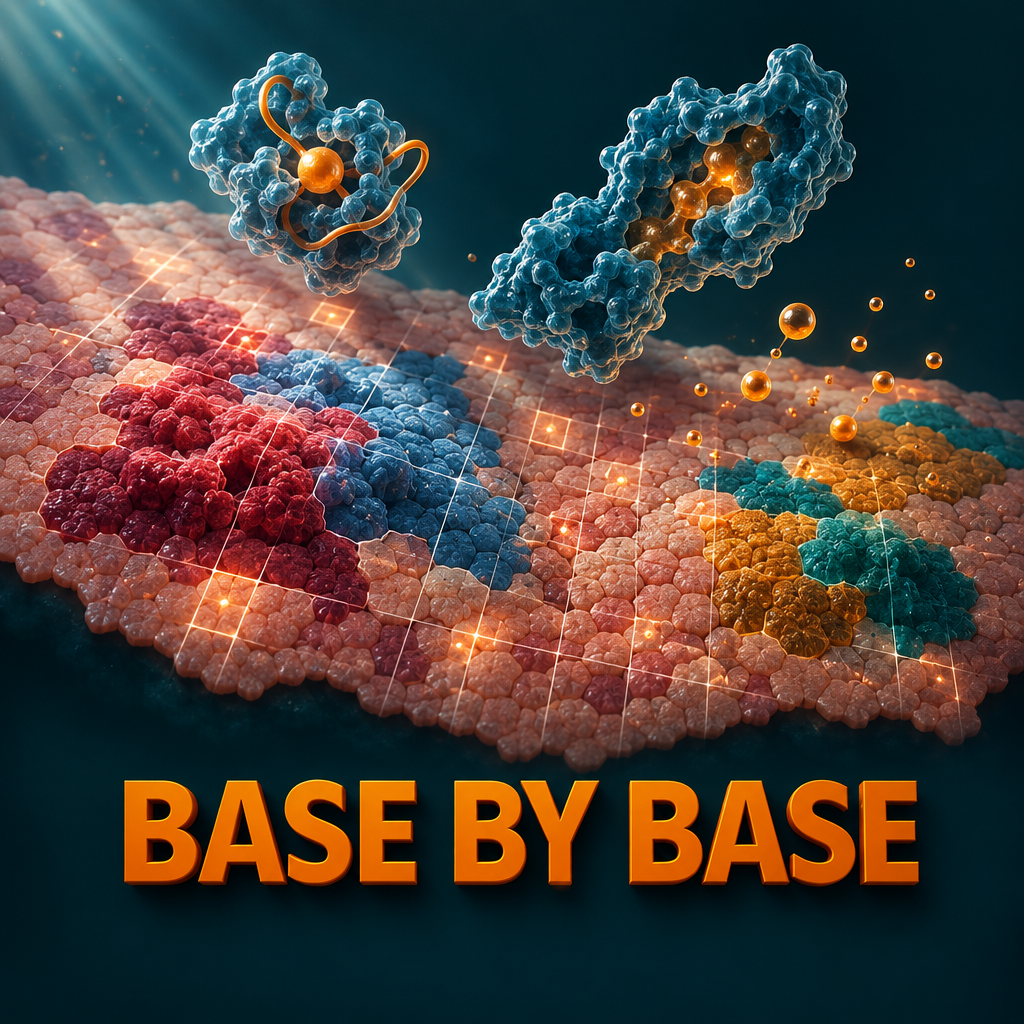
[00:05:07] Think of that grid as a survey map laid over the hillside. Each square is a plot of land and the team listed which trees grow in it. Three kinds of sequencing did the listing. The first, called nanoseq, reads single DNA molecules on both strands. It finds mutations even in a mixed sample of many clones. So it measures the total mutation load and its signatures, whatever the size of each clone.
[00:05:33] The second is targeted sequencing. Deep reading of cancer associated genes in every square.
[00:05:41] How big was that targeted survey? 1,995 squares across 324 cancer associated genes. In total, 23,692 independent mutations.
[00:05:56] When the same mutation turned up in neighboring squares, it was counted once as a single clone spreading across them. The third method was whole genome sequencing of small punches of tissue from single large clones to look for bigger changes like lost or gained pieces of chromosomes.
[00:06:16] With the map in hand, how do you tell that a mutant gene is winning? The team used a ratio that compares protein changing mutations with silent ones in the same gene. Silent mutations do not change the protein, so they work as a baseline of chance. If a gene carries Far more protein changing mutations than chance predicts. Those mutations are helping their clones grow.
[00:06:39] That gene is under positive selection. Put another way, it is a tree that covers more than its share of the hillside.
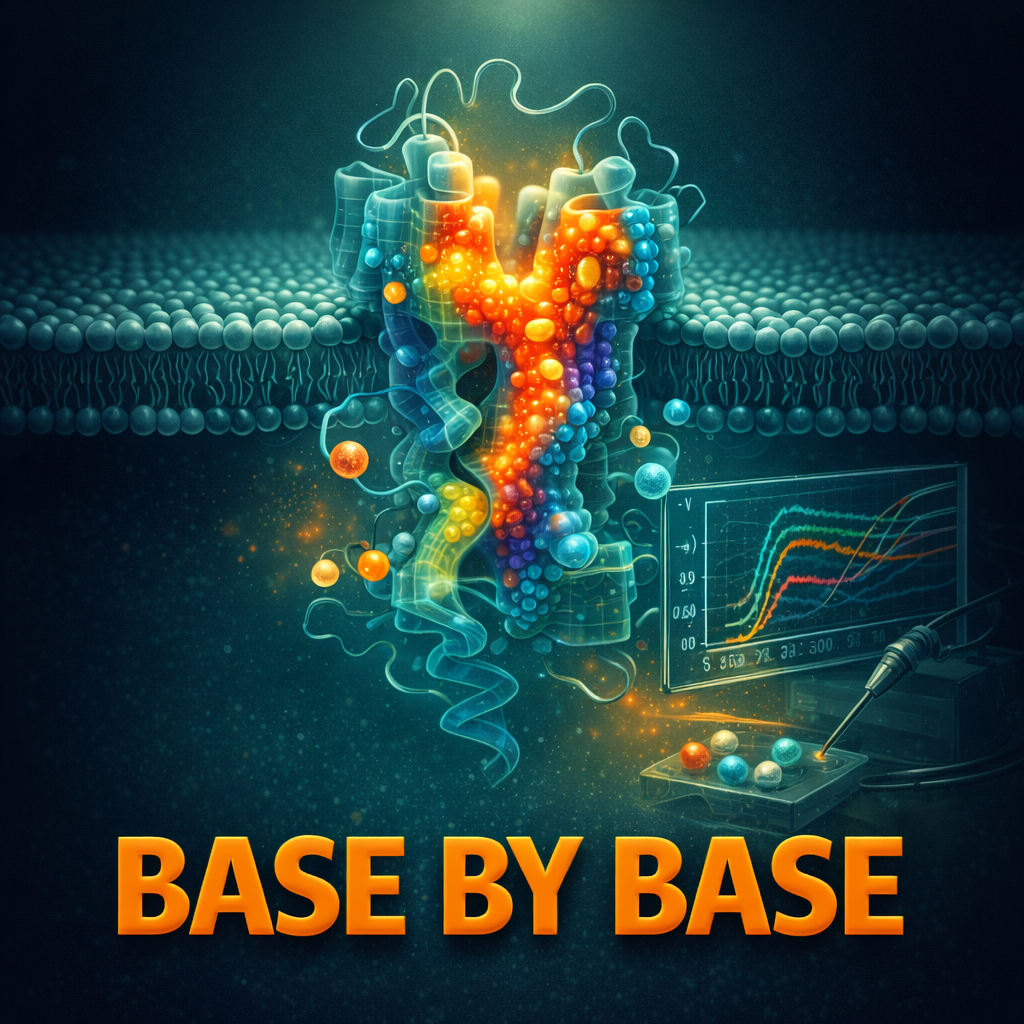
[00:06:49] The team then looked inside the proteins themselves for several selected genes. They mapped where the mutations fall on the three dimensional structure and estimated with computer models how each each one changes the way the protein binds its partners for one gene. They also ran a lab test in cultures grown from mouse esophagus. They used CRISPR to break the gene in two different places, exposed the cultures to radiation or to 5 fluorouracil, and measured which edits became more common.
[00:07:23] The first result was an absence. No treatment specific mutational signature could be reliably detected. The signatures of five fluorouracil, oxaliplatin and carboplatin were absent from the normal esophagus.
[00:07:38] After adjusting for the area sampled, the density of mutations was similar in every group. So the authors argue that most of the mutant clones they found likely existed before treatment began.
[00:07:50] Differences between the groups would then reflect a change in which clones were selected.
[00:07:55] Same trees, different winners One group stood out. Even so, in patients who had CROs chemotherapy combined with radiation, the total mutation load measured by nanoseq was significantly higher than in the other groups. They also carried more small insertions and deletions, mostly deletions, a pattern consistent with exposure to radiation.
[00:08:19] The other four groups looked like each other and like the normal esophagus of people of similar age without cancer.
[00:08:28] Now the clones Some genes were winners in every group, the same ones that win in people without cancer TP53, PPM1D, Notch1, Notch2, and Fat1. But in cross patients, two of them covered far more ground.
[00:08:45] The share of esophageal lining carrying TP53 or PPM1D mutations was double that of the other groups.
[00:08:53] Double. And the individual TP53 and ppm1D clones were substantially larger.
[00:09:01] What makes ppm1D interesting is the kind of mutation it carries in every group. Over 90% of its mutations were nonsense or frameshift changes in Exon 6. These do not destroy the protein. They produce a stabilized form that keeps working and inhibits TP53 in blood stem cells. Such mutants confer resistance to chemotherapy and radiation, so the team tested them in the dish in the mouse cultures. Breaking ppm1D early in exon1 made cells less fit. But edits in exon6, the kind seen in patients, were more strongly selected in cultures exposed to radiation than in cultures given five fluorouracil or left untreated. The authors conclude that radiation selectively expands these ppm1D mutants in esophageal lining, and they flagged the limit.
[00:09:57] The dish got radiation alone, not the full cross mix of radiation, carboplatin and paclitaxel.
[00:10:07] There was more in the cross group at the level of whole chromosome pieces. Pieces over 5% of cross samples carried a copy number change on chromosome 17 covering the TP53 gene, significantly more than the other groups in whole genomes from single clones, three of 27 cross clones had both copies of TP53 disrupted. None of the four flot or six untreated samples did. The overall share of the genome with copy number changes also trended higher in CROs, but that did not reach significance.
[00:10:41] Two more genes were selected only in cross patients. The first is the immune gene HLAB.
[00:10:47] Five of the 11 CROs patients carried at least one protein changing HLAB mutation, and 13 of 22 of those mutations, 59% were the kind likely to leave no working protein. The HLA region on chromosome 6 also had copy number changes in horizon 8.7% of cross samples. In cancer, disrupting HLA genes drives clone expansion, with selection driven by T cells.
[00:11:15] The second is spop, an adapter protein involved in the DNA damage response and cell death.
[00:11:22] 18 of its 21 mutations in cross patients were missense single letter changes, and they clustered together.
[00:11:29] Modeling suggested they change how SPOP binds its partner, much like loss of function mutations known from prostate cancer. The authors put this as a chemoradiation may select these SPOP mutants now the second fire in the flot group, three other genes were under positive selection, and only NFE2L2, RAC1 and MTOR. All three are potentially druggable. NFE2L2 controls the cell's response to oxidative stress and is normally held in check by a partner called KEEP one. FLOT patients showed the most significant clustering of its mutations, with 78% of missense mutations in the KEAP1 binding region that did not reach significance, so the authors only suggest FLOT enhances this selection.
[00:12:25] RAC1 is a molecular switch that flips between off and on depending on whether it holds GDP or gtp.
[00:12:34] Mutations near its hinge regions were common in untreated patients too, but in FLOT patients the mutated positions sat significantly closer to the bound gtp, and models predicted they change how strongly it binds.
[00:12:48] Simulations of four common FLOT mutants showed the moving parts of the switch became more flexible than in the normal protein. The authors suggest these mutants may be more active while noting other mechanisms are possible.
[00:13:04] MTOR is a kinase that regulates cell growth. Its mutations fell significantly closer to the kinase domain than chance would place them most strongly in the FLOT group and many matched mutations already shown to activate the path protein. Clones with kinase domain mutations were larger than clones with other MTOR missense mutations and flat patients had a higher density of them.
[00:13:28] One more prediction from the the FLOT mutants were not predicted to change how rapamycin binds, so these clones would likely stay sensitive to rapamycin like drug.
[00:13:44] So what does this change? The headline is speed. The authors write that a mutational landscape built over decades may be altered dramatically in just a few weeks of treatment. Mostly, the authors argue, not through new mutations but by changing which pre existing clones expand and it depends on the treatment. Cross with radiation favored TP53, PPM1, D, HLAB and SPOP mutants.
[00:14:10] Flot favored NFE2L2, RAC1 and MTOR.
[00:14:16] Why does the TP53 result matter? Disrupting both copies of TP53 is required for most precancerous lesions and squamous cancers of the esophagus and in breast cancer survivors. Past radiation to the esophagus is associated with a higher risk of esophageal squamous cancer. The authors suggest that radio radiation driven expansion of TP53 mutant clones with copy number changes at that gene is a potential mechanism for this risk. That is a proposed link. The study measured clones at surgery, not later cancers. It also reinforces the case for sparing normal tissue during radiation.
[00:14:57] The FLOT result raises a different question.
[00:15:01] All three FLOT selected mutants are gain of function and the authors propose they may protect normal esophageal cells against 5 fluorouracil in tumors. MTOR and NFE2L2 activation is linked to 5 fluorouracil resistance, but the link to the drug rests on what sets FLOT apart, and these three mutants were not tested against it in the lab. The authors are also clear that selection in normal tissue cannot be assigned assumed to match selection in cancer cells.
[00:15:34] We should also note the limits of the design. The groups were small with 7 flot patients and 11 cross patients, and data on environmental exposures were limited. Larger studies are needed to see whether age, sex or smoking interact with treatment.
[00:15:50] Tissue was collected once at surgery so the groups are compared with each other and the study did not detect negative selection with only 3669 silent mutations across all 324 genes. The authors suspect it was underpowered to see it.
[00:16:12] So here is where this leaves us. The normal esophagus of a patient with cancer is already a dense patchwork of mutant clones.
[00:16:20] No treatment specific mutational signature was reliably detected, but different treatments went with different winners. Chemo radiation went with twice as much. TP53 and ppm1D mutant lining plus selection of HLA B and spop flot went with selection of NFE2, L2, RAC1 and MTOR, and its MTOR mutants were predicted to stay sensitive to rapamycin like drugs.
[00:16:50] Remember the hillside after the fire? For the most part, the flames did not plant new trees. They changed which of the trees already there could spread, and a different kind of fire favored different trees.
[00:17:03] That turns normal tissue into a place to read how cells withstand therapy one clone at a time.
[00:17:10] What does this mean for the future of choosing cancer treatments? If we can see which healthy cells, each one helps helps to win.
[00:17:21] This episode was based on an Open Access article under the CC BY 4.0 license. You can find a direct link to the paper and the license in our episode description. If you enjoyed this, follow or subscribe in your podcast app and leave a five star rating. If you'd like to support our work, use the donation link in the description. Thanks for listening and join us next time as we explore more science base by base.