Episode Transcript
[00:00:20] Speaker A: Welcome to Base by Bass, the papercast that brings genomics to you wherever you are.
Thanks for listening and don't forget to follow and rate us in your podcast app. I'm your host and I'm here in the studio with our resident genetics expert.
[00:00:32] Speaker B: Hi, everyone.
Really excited to be here today. We've got a fascinating deep dive lined up for you.
[00:00:38] Speaker A: We really do.
And, you know, for decades, the biological rule book has been, well, it's been crystal clear on this one specific thing.
[00:00:47] Speaker B: Unforgiving, really.
[00:00:48] Speaker A: Right. Basically, if a mammal is born without this one specific gene, the ETG12 gene, it dies, like, on day one. This is a hard biological stuff.
[00:00:59] Speaker B: Yeah. The transition at birth is just too massive.
[00:01:01] Speaker A: Exactly. The mammalian body just, you know, cannot process that metabolic shock of being born without its internal cellular recycling machinery.
So that's the established dogma. But today we're looking at something that kind of shatters that.
[00:01:13] Speaker B: It really does.
[00:01:14] Speaker A: We're looking at the medical records of six children living across the globe who have mutations that severely cripple this exact same biological system.
[00:01:22] Speaker B: Right, the system that's supposedly absolutely essential for life.
[00:01:26] Speaker A: Yeah. I mean, according to our foundational models, they shouldn't be alive, but they are.
So for all of you listening, we're asking the big questions today. How are they surviving?
And what actually happens to a human brain when its fundamental waste management system is just constantly operating on the brink of total collapse?
[00:01:46] Speaker B: It's a wild medical paradox. And today we celebrate the work of Lambton and this massive international consortium of geneticists and neurologists who have advanced our understanding of both the vulnerability and, honestly, the shocking resilience of the human central nervous system.
[00:02:03] Speaker A: An incredible piece of detective work, truly.
[00:02:05] Speaker B: Their paper, which was published in the American Journal of human genetics in May 2026, systematically deconstructs this paradox. It basically forces us to completely rethink the entire concept of genetic lethality.
[00:02:17] Speaker A: Okay, let's unpack this. We need to talk about autopsy.
[00:02:20] Speaker B: Right, the recycling system.
[00:02:21] Speaker A: Exactly. So for you listening, think of autophagy like a city's waste management and recycling system. The word literally means self eating.
[00:02:29] Speaker B: Yeah.
[00:02:30] Speaker A: But mechanistically, it's the process where a cell forms this double membrane vesicle, an autophagosome to basically bag up the trash.
[00:02:38] Speaker B: Yeah. It swallows up all the damaged proteins and exhausted organelles.
[00:02:42] Speaker A: Right. And then it hauls that garbage bag over to the lysosome to be broken down and recycled.
And the gene in the spotlight today, ATG12, is the essential machinery that physically forms that garbage Bag. It's the linchpin.
[00:02:55] Speaker B: It really is. It functions as part of this ubiquitin like conjugation system. So it has to physically bind, like covalent bond to another protein called ATG5
[00:03:05] Speaker A: to scratch the membrane out, Right?
[00:03:06] Speaker B: Exactly. It has to bend and expand that membrane around the cellular debris. And what's fascinating here is that this covalent bond is considered absolutely non negotiable for membrane elongation.
[00:03:17] Speaker A: Which is where the whole day one lethality thing comes from.
[00:03:19] Speaker B: Right. Because when researchers engineer knockout mice, mice that completely lack the ADDG12 gene, the result is highly penetrant perinatal lethality. Basically, the moment the mouse is born, its nutrient supply from the placenta is complet cut off.
[00:03:34] Speaker A: So it's instantly starving.
[00:03:36] Speaker B: Yes. It enters this severe starvation period before it can even begin nursing. And without ATG12, the newborn mouse just can't trigger autophagy to cannibalize its own internal fat and protein reserves for energy.
[00:03:48] Speaker A: Oh, wow. So it just runs out of fuel?
[00:03:50] Speaker B: It does. It dies of severe energy depletion within hours of birth. So naturally, the scientific consensus was that ATG12 is strictly essential for extra chodaran survival.
[00:03:59] Speaker A: Okay, but, and here's my main pushback.
If a broken ATG12 gene is completely lethal in mice at birth, how on earth is this paper describing six living children?
[00:04:11] Speaker B: Yeah, that's the ultimate question.
[00:04:12] Speaker A: I mean, these kids are from five completely unrelated families across the globe. How do we even find them, let alone explain how they survived?
[00:04:19] Speaker B: Finding them was an absolutely massive undertaking. It required federating genomic data on a global scale.
The researchers had to rely heavily on matchmaking platforms, specifically one called genematcher, which
[00:04:32] Speaker A: is kind of like a dating app, but for geneticists trying to solve rare diseases.
[00:04:36] Speaker B: Right, that's a great way to put it. So imagine a clinical geneticist in one country, they perform whole exome or whole genome sequencing on a patient who has this unexplained severe neurodevelopmental delay. And they flag a variant of uncertain significance in the ATG12 gene. Now, in isolation, that's just a single data point.
[00:04:57] Speaker A: It doesn't prove anything, because everyone has weird genetic variants that don't actually do anything harmful.
[00:05:01] Speaker B: Exactly. But by plugging that specific variant into genematcher and querying global databases, they start pulling matching phenotypes from patients in Norway, India, the UK and Pakistan.
[00:05:11] Speaker A: Wow. All popping up with mutations in the exact same gene.
[00:05:15] Speaker B: Right. The genomic sequencing revealed these shared biallelic missense variants in the ATG12 gene across all these unrelated families.
[00:05:23] Speaker A: Okay, so they find the patients.
Let's talk about the symptoms. Because they share a really profound clinical phenotype.
[00:05:30] Speaker B: They do. It's highly specific.
[00:05:32] Speaker A: Yeah, we're talking severe global developmental delay, intellectual disability, congenital ataxia. So uncoordinated movement, extreme hypotonia or low muscle tone, and early onset seizures.
[00:05:44] Speaker B: Very severe neurological impacts.
[00:05:46] Speaker A: Yeah, and that's the thing I notice when you look at the MRI data in this paper. It's not like the whole body is degrading uniformly. The whole body needs recycling, obviously, but the physical impact is highly localized to the brain.
[00:05:58] Speaker B: Specifically the cerebellum.
[00:06:00] Speaker A: Yeah. Right. They saw cerebellar vermian hypoplasia, which is a severe underdevelopment of the central part of the cerebellum and also posterior atrophy of the corpus callosum. So if autophagy is this ubiquitous requirement for every cell in the body, why is the brain, and specifically the cerebellum, taking the absolute hardest hit?
[00:06:20] Speaker B: Well, to answer that, the researchers first had to prove exactly how these specific genetic typos were breaking the machinery. And they didn't just look at the linear DNA sequence. They. They used Alphafold.
[00:06:30] Speaker A: Ah, AlphaFold. The AI protein folding predictor.
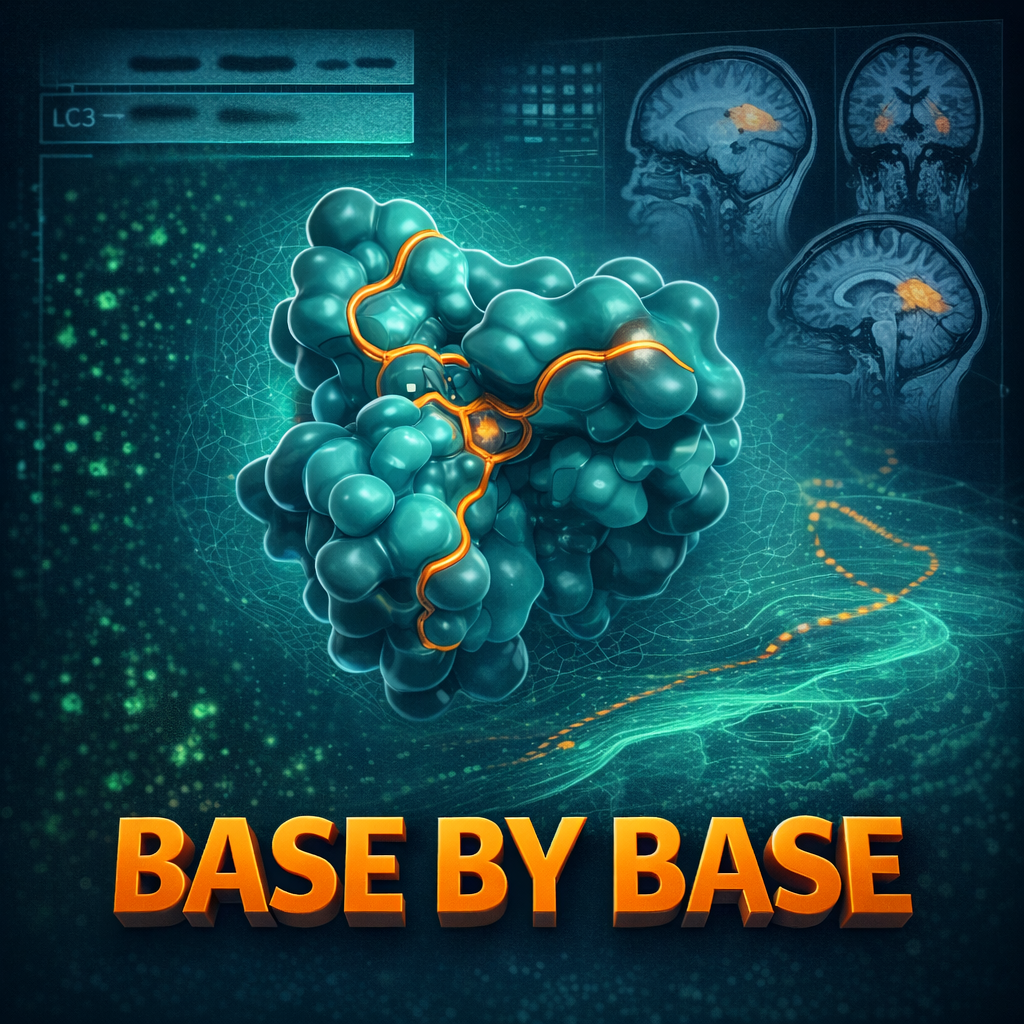
[00:06:33] Speaker B: Exactly. They used it to create 3D structural models of the mutated ATG12 proteins. They wanted to see the physical consequences of variants like PT120SER or PFI108LU.
[00:06:46] Speaker A: So they mapped those mutations onto the 3D model of ATG12 when it's bound to its partners, ATG5 and ATG3.
[00:06:53] Speaker B: Yes, because AlphaFold looks at evolutionary conservation and physical constraints to predict how that chain of amino acids folds in 3D space.
[00:07:02] Speaker A: And when you swap out just one amino acid for a different one, you completely change the local thermodynamics of the shape.
[00:07:08] Speaker B: And the thermodynamic changes here are incredibly precise. All of these missense mutations cluster on one very specific structural domain, the ubiquitin, like fold. It's the exact spot where ATG12 connects with its conjugation partners.
[00:07:20] Speaker A: Okay, I think an analogy works best here. Think of this like a Lego set.
[00:07:24] Speaker B: Oh, I like that.
[00:07:25] Speaker A: Right, so the mutations don't destroy the Lego brick entirely. It's not a smashed brick, but they warp the connecting studs on the top of the brick just enough so that the other bricks, ATG5 and ATG3, can't quite click into place smoothly.
[00:07:37] Speaker B: That is a perfect way to visualize it.
For instance, substituting a bulky Tyrosine residue with a small serine at position 120 creates an actual structural void. It destabilizes the grip, essentially.
[00:07:50] Speaker A: So the ATG12 protein is physically there, but it can't stably lock into its partners to drive the cellular garbage bags to form.
[00:07:58] Speaker B: Right, but AlphaFold is just a computer prediction. You have to validate that in the wet lab. So the team obtained primary skin fibroblasts, skin cells from the patients to measure their autophagic flex.
[00:08:11] Speaker A: I needed to see the garbage system failing in real time.
[00:08:14] Speaker B: Exactly. And to do that, they used this brilliant biochemical assay involving a chemical called Bphelamycin A1.
[00:08:20] Speaker A: Oh, I love this part. Bafelomycin A1 basically inhibits the proton pump on the lysosome, right?
[00:08:26] Speaker B: Yes, the vat paste pump.
[00:08:28] Speaker A: Because normally the lysosome pumps in protons to make itself super acidic. So it can dissolve the trash.
[00:08:33] Speaker B: Right. It needs that acid bath. So by blocking the pump, the researchers are intentionally jamming the incinerator.
[00:08:39] Speaker A: Okay. So the trash can't be burned. Which means it starts piling up on the conveyor belt.
[00:08:43] Speaker B: You got it. Specifically, a marker protein called LC32 starts to pile up. And by measuring how fast it piles up, they can calculate the exact speed of the cell's recycling system.
[00:08:54] Speaker A: Okay, so what happened when they ran this test on the actual patient cells?
[00:08:58] Speaker B: Well, this is where they hit a stunning clinical paradox. They tested patient S2 and patient S3. In patient S2's skin cells, the biochemical defect was catastrophic. Total loss of the normal ATG12, ATG5 conjugate.
[00:09:12] Speaker A: So the LEGO bricks weren't connecting at all in that test.
[00:09:14] Speaker B: Exactly. But here's the paradox. Patient S2 actually did not have the most severe clinical symptoms compared to other known patients in similar cohorts.
[00:09:23] Speaker A: Wait, really? The worst lab result, but not the worst symptoms.
[00:09:26] Speaker B: Right. And conversely, patient S3's skin cells had an intact conjugate. The bricks were clicking together, but the recycling speed was just significantly slowed down. Yet patient S3 had a highly severe clinical picture that even involved kidney issues. Not just the brain.
[00:09:41] Speaker A: Okay, I have to jump in here. I feel like we can't draw hard conclusions from skin cells in a plastic dish.
[00:09:46] Speaker B: Oh, absolutely not.
[00:09:47] Speaker A: I mean, a skin fibroblast sitting in nutrient rich broth in a lab is fundamentally different from a growing neuron in a developing fetal brain. The energy demands, the stress. It's just a totally different world. A mutation that breaks the bond in a resting skin cell might just mean it's wobbly in a different context.
[00:10:06] Speaker B: And the researchers fully acknowledged that limitation. The skin cell data proved the mutations were harmful. Yes, but it still didn't explain the survival of the patients versus the knockout mice that died at birth.
[00:10:17] Speaker A: Right. The core mystery.
[00:10:19] Speaker B: So this raises an important question. Is the machinery completely broken or just crippled? To find out, they engineered knockout HeLa cells and crucially, knockout baker's yeast.
[00:10:30] Speaker A: Baker's yeast? Like Saccharomyces cerevisiae?
[00:10:33] Speaker B: The very same. The evolutionary conservation of this autophagy pathway is just staggering. You can take a human ATG12 gene, drop it into a fungus that we separated from over a billion years ago, and it will still attempt to interface with the yeast native recycling machinery.
[00:10:47] Speaker A: That is mind blowing. So what happened when they put the patient's warp genes into the knockout yeast in HeLa cells?
[00:10:53] Speaker B: The cells didn't die.
The mutated genes successfully, though very weakly induced autophagy. It proved conclusively that these are hypomorphic mutations. They grant partial function. They're maybe operating at like 10 or 15% of normal efficiency.
[00:11:10] Speaker A: Okay, that changes everything. That partial function is the key that completely resolves the survival paradox. The mice died because their gene was completely deleted. 0% function.
[00:11:20] Speaker B: Exactly.
[00:11:21] Speaker A: But the human patient survived that neonatal starvation period at birth. Because their warped ATG12 protein could still turn the engine over just enough to metabolize basic energy. They just barely avoided the crash.
[00:11:34] Speaker B: Precisely. But surviving birth is one hurdle. Building and maintaining a human nervous system over years is a totally different metabolic challenge.
[00:11:42] Speaker A: Right. The brain is a massive energy hog.
[00:11:45] Speaker B: It is so to see the long term effects of a crippled recycling system in a living creature. They created mutant zebrafish with G12 knockouts.
[00:11:53] Speaker A: Which is such a smart model. Here's where it gets really interesting for you listening. Zebrafish embryos develop completely outside the mother. And they are transparent.
[00:12:01] Speaker B: Right. So no maternal placenta to mask early failures. You can literally watch the brain wiring itself under a microscope.
[00:12:09] Speaker A: Exactly. And the mutant zebrafish looked perfectly normal at day five. Like, totally fine.
[00:12:14] Speaker B: Yeah. Their initial body plan and neural tube formed without a hitch. But by day 15, the biological debt came due.
Systemic functional collapse. The mutant fish showed severe developmental delay. Behavioral tests showed drastically reduced movement in light and dark, Impaired visual startle responses.
[00:12:34] Speaker A: And the brains were physically disorganized. Right. Reduced synaptic labeling, axonal tracks failing to connect. They all died before reaching adulthood.
[00:12:41] Speaker B: Exactly. And if we connect this to the bigger picture, it loops right back to your earlier question.
Why the cerebellum? Why are the specific Circuits in the brain physically dying.
[00:12:50] Speaker A: Right. Why does a slow recycling system cause an axon to physically degrade?
[00:12:55] Speaker B: The paper points heavily toward mitophagy, which is the specialized recycling of damaged mitochondria.
[00:13:01] Speaker A: Okay, so, you know, mitochondria are basically the power plants of the cell. And neurons need a massive amount of
[00:13:06] Speaker B: power to function, astronomical amounts of ATP. But those power plants have a shelf life. As they work, they accumulate damage and start leaking reactive oxygen species, or ros.
[00:13:17] Speaker A: And ROS are highly toxic free radicals. It's basically cellular radiation. If you don't clear out the leaking power plant, it destroys the whole cell.
[00:13:25] Speaker B: Exactly. Now apply that to the cerebellum, specifically the Purkinje cells.
[00:13:30] Speaker A: Oh, those are some of the largest neurons in the human brain. Right? Huge complex branches.
[00:13:35] Speaker B: Yes. They coordinate our modem movements and fire at incredibly high frequencies. That demands a massive local population of mitochondria, which means an unusually high rate of mitophagy to clear out the exhausted ones.
[00:13:48] Speaker A: Okay, it all clicks together. Now, when the ATG12 machinery is only running at, like, 15% efficiency, it just cannot keep pace with the trash generated by a Purkinje cell.
[00:13:58] Speaker B: It's completely overwhelmed.
[00:13:59] Speaker A: The garbage bags can't engulf the damaged power plants fast enough. The toxic ROS leaks out, triggers oxidative stress, and the neuron actually activates apoptosis. It actively dismantles itself.
[00:14:10] Speaker B: Programmed cell death. That is exactly how we get cerebellar Vermian hypoplasia. The brain tissue is literally choking on its own toxic exhaust.
[00:14:18] Speaker A: So what does this all mean? Autophagy is clearly non negotiable for human neural integrity. But human biology has these astonishing, previously unknown workarounds that allows survival even when this core system is damaged.
[00:14:32] Speaker B: Right, and this study solidifies an emerging group of congenital autophagy disorders.
ATG12 is now joining known mutations in ATG5 and ATG7.
[00:14:42] Speaker A: Which has to be huge for future treatments, right?
[00:14:44] Speaker B: Absolutely. Because if the issue is just a sluggish system, the future isn't necessarily gene therapy, which is super hard in the brain. It's generalized autophagy boosting treatments. Small molecule enhancers that essentially act as chemical chaperones to stabilize that wobbly Lego
[00:14:58] Speaker A: connection, just giving the existing Mach.
That is incredible. And, you know, for all of you listening, I want to leave you with a final lingering thought based on all of this.
The dogma was that without ATG12, you die at birth period. But human bodies clearly have hidden compensatory pathways that mice just lack.
So if we have secret biological workarounds for something as fundamental as this.
What other genetic conditions out there are currently labeled lethal, but actually have a hidden spectrum of human survivors just waiting to be diagnosed by next generation sequencing?
[00:15:32] Speaker B: It's a profound question. It really shows how much we still have to learn.
[00:15:36] Speaker A: It really does. The limits of human resilience are just far wider than we ever modeled this episode was based on an Open Access article under the CC BY 4.0 license. You can find a direct link to the paper and the license in our episode description. If you enjoyed this, follow or subscribe in your podcast app and leave a five star rating. If you'd like to support our work, use the donation link in the description now. Stay with us for an original track created especially for this episode and inspired by the article you've just heard about. Thanks for listening and join us next time as we explore more science. Bass by bass.
[00:16:25] Speaker C: In the quiet hours so sweep the floor Tag the worn out pieces in the malva door But a tiny letter in the code slips wrong and the night shift fades before it's even on no blowing conveyor, no turning wheel the cutter builds where it used to to heal A broken handshake, a missing link and the hole in the side begins to sink when the cleanup crew falls silent in the dark Little signals miss their mark which should be cleared stays caught in place and the brain learns a heavier pace but we can trace it line by line Find the fault, redraw the sign.
Two quiet changes paired like locked doors and fragile circuits and spinning floors Steps turn sideways, storms in the mind seizures like lightning it cannot run in time across bright screens and long la days we follow flux through hidden pathways from patient cells to model lives A single gene explains the dive not every hit is the same degree but every clue brings Clari.
When the cleanup crew falls silent in the dark Little signals miss their mark still we name it, make it known so no one searches along from star recycle to learning light we map the silence into sight and in that answer we acknowledge.