Episode Transcript
[00:00:08] Speaker A: In the quiet before the first start sign, A five prime doorway holds the line. Tiny flags upstream hidden in the welcome
[00:00:20] Speaker B: to Base by Bass, the papercast that brings genomics to you wherever you are.
Thanks for listening and don't forget to follow and rate us in your podcast. Appreciate so imagine you are reading a like a vintage recipe book, okay? When you want to bake a cake, you immediately look for the main ingredients, right? The flour, sugar, the eggs, and, you know, the numbered instructions. We always focus on that core set of instructions.
[00:00:44] Speaker C: Right. Getting right to the actual baking.
[00:00:46] Speaker B: Exactly. But what if there are little scribbled notes in the margins right before the recipe even begins? Notes that say things like actually stop and make a frosting first or wait, skip the next two steps?
[00:00:59] Speaker C: Oh wow. Yeah, that would change everything, right?
[00:01:01] Speaker B: Those little scribbles completely dictate whether the cake gets made at all, or if it just turns into a total disaster. And in genetics, we have spent decades obsessively focusing on the main recipe, the protein coding sequences of our DNA.
[00:01:14] Speaker C: We really have.
[00:01:15] Speaker B: But today we are looking at the margins.
What really happens when a genetic typo lands in the preface of our instruction manual?
I mean, how could translating the seemingly silent dark matter just upstream of our genes unlock the mysteries of cancer, autoimmune diseases and severe infections?
[00:01:35] Speaker C: It demands a complete shift in how we read the human genome, honestly, because, well, for a long time these upstream regions were notoriously difficult to interpret, just
[00:01:43] Speaker B: ignored basically, pretty much.
[00:01:45] Speaker C: I mean, they were often dismissed or overlooked simply because we lacked the computational sophistication to decode them properly. But we are finally realizing that the instructions for weather approach protein is built at all, and in what quantities are just as critical as the instructions for how to build it physically.
[00:02:02] Speaker B: Today we celebrate the work of Matthew Child, de Boss, Peng Zhang, Aureli Kobas, Jean Laurent Casanova and their colleagues at the Rockefeller University and the Necker Hospital in Paris who have advanced our understanding of how non coding genetic variants impact protein translation.
[00:02:17] Speaker C: Yeah, and for this deep dive, we are exploring their Open Access article titled Genome Wide Detection of Human five UTR Variants that Impact Protein translation.
It was published in the American Journal of Human Genetics, Volume 113 on April 2, 2026.
[00:02:33] Speaker B: So if you're looking at this from a genomic perspective, you probably already know the basics of how a ribosome scans an MRNA transcript looking for the start codon.
[00:02:41] Speaker C: Right? The basic biology.
[00:02:43] Speaker B: Exactly. But what we often gloss over is the complex, highly regulated landscape it has to cross to get there. We are talking about the five foot untranslated region, or, you know, the five few tr.
[00:02:53] Speaker C: Yeah.
[00:02:54] Speaker B: So let's map out what is actually happening in this space before the main protein sequence begins.
[00:02:59] Speaker C: Well, the 5 UTR is incredibly dynamic. It is not just like an empty Runway leading up to the main gene.
[00:03:04] Speaker B: Right.
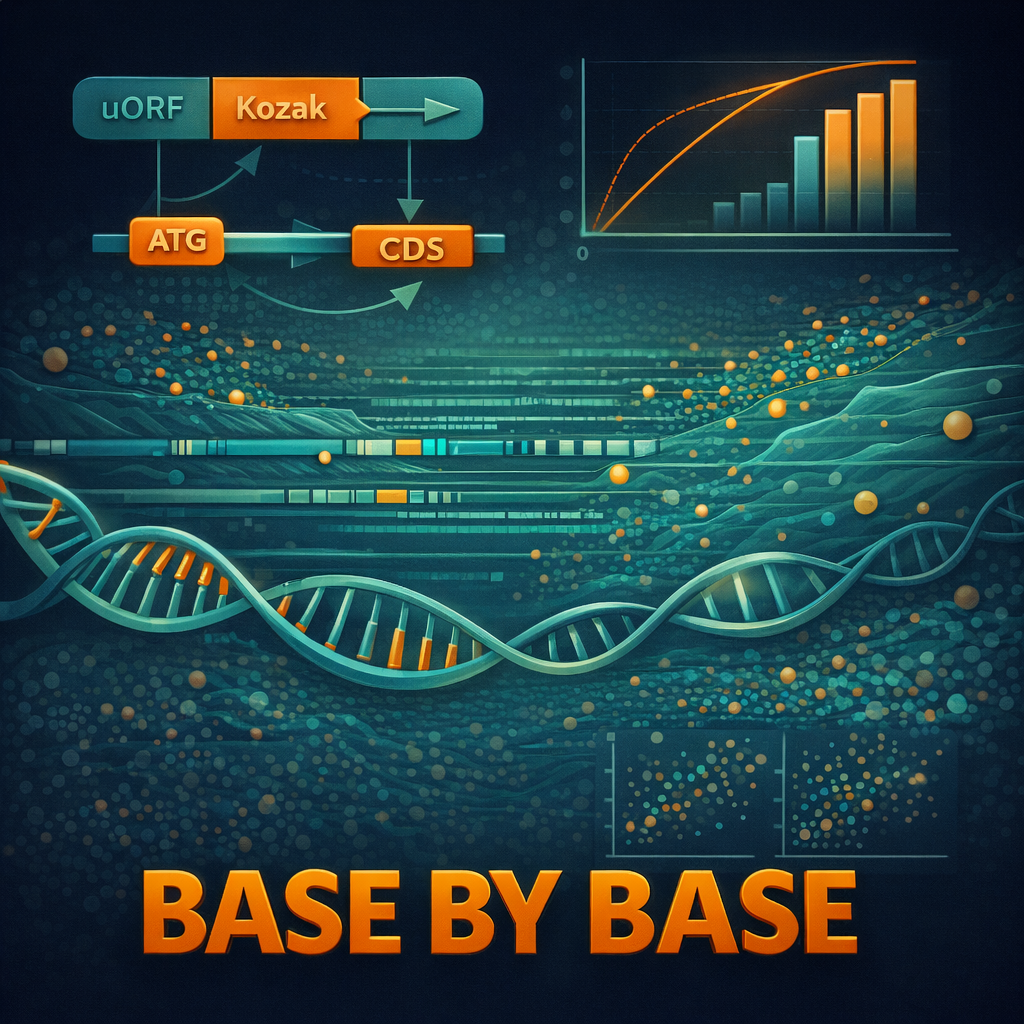
[00:03:04] Speaker C: When the ribosome binds to the mRNA, it has to navigate this whole gauntlet of regulatory elements. The most prominent signal it searches for is the Kozak sequence.
[00:03:13] Speaker B: The landing pad.
[00:03:14] Speaker C: Exactly. The landing pad. You can visualize the Kozak sequence as the context surrounding the main start cut on usually the letters atg. It signals to the scanning ribosome that, hey, it has arrived at the correct official starting line to begin synthesizing the protein.
[00:03:28] Speaker B: But it's not a straight shot to that starting line, is it? I mean, the 5 foot UTR is littered with these elements called urfs. Upstream, open reading frames.
[00:03:37] Speaker C: Yeah.
[00:03:38] Speaker B: So if the Kozak sequence is the official starting line, urfs are like setting up a fake finish line halfway through a marathon.
[00:03:45] Speaker C: That is a perfect way to conceptualize it. These urfs are tiny decoy sequences located before the main gene. And they have their own start codons and their own stop codons.
Very. So when a scanning ribosome encounters a urrf, the biological machinery might get confused and start translating that tiny irrelevant sequence instead of continuing to the main gene.
[00:04:07] Speaker B: And the physical consequence of that is the ribosome either stalls out on the MRNA track, creating a massive traffic jam, or it just. It falls off the strand entirely. Either way, the actual protein you need never gets built. But, you know, we've known about these decoys for a while, right? This isn't entirely new biology.
[00:04:25] Speaker C: Far from it. I mean, pathogenic variants in Kozak motifs were linked to a blood disorder called alpha thalassemia way back in 1985.
[00:04:32] Speaker B: Oh, wow. That long ago?
[00:04:34] Speaker C: Yeah. And variants that accidentally create new destructive urfs were linked to beta thalassemia in 1991.
So the scientific community knew these mutations could cause severe disease.
[00:04:45] Speaker B: Right.
[00:04:46] Speaker C: The bottleneck was our ability to find them systematically across the entire human genome.
[00:04:52] Speaker B: Because finding them manually is like finding a needle in a haystack. I mean, the regulatory rules in the 5 foot UTR are so complex. Exactly. And most of our standard computational tools were, like, aggressively optimized to look for severe changes in the main coding sequence. Things like nonsense mutations or frame shifts in the protein itself. So they were practically blind to the intricate margin nodes.
[00:05:13] Speaker C: Which brings us to the core methodology of this new research. To solve this specific computational blind spot. The researchers engineered a tool called 5iltray.
[00:05:22] Speaker B: 5iltrate?
[00:05:23] Speaker C: Yeah, which stands for 5 foot untranslated region annotation. They fed it a highly Curated dataset of 18,775 standardized protein coding transcripts from the Maine database.
[00:05:35] Speaker B: Okay, so a massive data set.
[00:05:36] Speaker C: Huge. This dataset represents the most well supported, universally agreed upon transcripts for human genes. 5 Ultraea processes these transcripts to detect and score genetic variants that manipulate this regulatory landscape.
[00:05:50] Speaker B: Variants that create brand new URF decoys or destroy existing regulatory ones.
[00:05:56] Speaker C: Right, right. Or alter the structural strength of those Kozak landing pads we talked about.
[00:06:00] Speaker B: Wait, hold on. I want to look at the geography of the transcript for a second, because the paper mentions that 5 Ultrara also factors in splicing errors. Yeah, it does, but splicing is the cellular editing process that cuts out non coding introns from the middle of the gene.
So if the 5 foot UTR is the absolute beginning of the RNA, the literal starting line, how can a squicing error mess with the region that comes before the splicing even happens?
[00:06:21] Speaker C: It is entirely counterintuitive. I know. Until you look at the actual architecture of our genes, it turns out that for about 37% of transcripts, the start of the protein coding sequence isn't actually located in the very first block of rna. The first exon. Wait, yeah, the official start codon is often located in a downstream Exon, like Exon 2 or Exon 3.
[00:06:41] Speaker B: Oh, that completely. Completely changes the picture. So the mature 5 foot UTR is actually stitched together from multiple different pieces of RNA.
[00:06:49] Speaker C: Exactly.
[00:06:49] Speaker B: It only fully forms after the splicing process is complete.
[00:06:53] Speaker C: And that creates a massive vulnerability. Because a mutation sitting deep inside a seemingly irrelevant intron can disrupt the splicing machinery.
[00:07:01] Speaker B: Right.
[00:07:01] Speaker C: If that machinery makes a bad cut, it might accidentally leave a massive chunk of an intron inside the 5utr. Or, you know, delete a crucial piece of the 5utr entirely.
[00:07:11] Speaker B: Which completely scrambles the sequence.
[00:07:13] Speaker C: Yes, potentially generating devastating new urf decoys out of thin air. So 5 volt here a is uniquely powerful because it integrates a deep learning algorithm called splice AI. Yeah, it catches these indirect MIS splicing mutations that previous tools ignored because they only looked at the continuous unspliced sequence.
[00:07:33] Speaker B: Okay, so they built an algorithm that can flag every possible decoy, speed bump and broken landing pad. Including the ones caused by downstream splicing errors.
[00:07:42] Speaker C: Exactly.
[00:07:43] Speaker B: But scanning the whole genome is going to throw thousands of these variants at you. I mean, how does the Tool differentiate between a mutation that actively causes disease and one that is just, you know, a harmless genetic quirk.
[00:07:56] Speaker C: Well, they deployed a machine learning model, specifically a random forest algorithm, to score and prioritize these variants.
[00:08:03] Speaker B: Okay, a random forest.
[00:08:04] Speaker C: Yeah, and random forest works by creating a multitude of decision trees during its training phase.
Each tree looks at a variant, weighs different biological features, and casts a vote on whether it thinks the variant is dangerous.
[00:08:15] Speaker B: And then it just tallies them up?
[00:08:17] Speaker C: Pretty much. The algorithm synthesizes all those votes to output a final probability score. To train it, they fed the model known severe disease causing variants from the human gene mutation database as positive controls and common harmless variants from healthy populations as negative controls.
[00:08:34] Speaker B: Okay, and they gave the algorithm 17 different biological features to evaluate for every single variant. Right, things like the distance from the new start codon to the main start codon, the overall length of the 5 foot UTR, and how many urfs normally exist in that specific gene.
[00:08:50] Speaker C: Yes, all of those.
[00:08:51] Speaker B: But out of all 17 features, one carried the most mathematical weight.
It was the single strongest predictor of whether a mutation actually broke the protein translation process.
[00:09:03] Speaker C: Yes, the paramount feature was the evolutionary conservation of the URFS start codon, specifically quantified by its phylops store.
[00:09:10] Speaker B: Phylloptic, right?
[00:09:11] Speaker C: Yeah. Phylop basically measures how unchanged a specific nucleotide has been over millions of years of vertebrate evolution.
[00:09:18] Speaker B: Because nature doesn't keep useless code around, right? I mean, if a specific genetic sequence is highly conserved across humans, mice, dogs and fish for over 100 million years.
[00:09:27] Speaker C: Exactly.
[00:09:28] Speaker B: It means that sequence is structurally load bearing. If it changes, the organism likely doesn't survive to pass it on.
[00:09:34] Speaker C: That is the fundamental principle. So if a mutation hits a highly conserved stork codon, the 5 ultraarray algorithm flags it with a massive warning sign. The algorithm recognizes that disrupting a sequence evolution fought so hard to protect is highly likely to crash translation.
[00:09:49] Speaker B: Okay, let's transition from the computational architecture to the biological reality. What actually happens when you unleash this trained model on actual human population data?
[00:10:00] Speaker C: Well, the sheer scale of the output is staggering. The researchers ran five ultra on 28 million variants from the NumID database, which, as you know, serves as a massive library of human genetic variation.
[00:10:12] Speaker B: Right.
[00:10:13] Speaker C: Out of those 28 million, the tool flagged over 137,000 variants that fundamentally alter translation by modifying urfs or kozak sequences.
[00:10:21] Speaker B: And when you look at the frequency of those 137,000 flagged variants in the general population, they are exceptionally rare. Like they have a Significantly lower minor allele frequency compared to other random mutations sitting in the exact same 5 UTR regions. We are seeing real time natural selection.
Because these specific mutations are so disruptive to protein assembly, evolution actively purges them from the gene pool, keeping them exceedingly rare in healthy people.
[00:10:48] Speaker C: It's a beautiful demonstration of intense evolutionary pressure acting on non coding regions.
But demonstrating evolutionary pressure isn't enough to prove the tool is clinically useful for diagnosing a patient sitting in a hospital.
[00:11:02] Speaker B: Right. It needs to be practical.
[00:11:03] Speaker C: Yeah. They had to benchmark its predictive power. So they tested 5 ultra on an entirely independent data set from Clinvar, which catalogs clinically significant variants and how to do 5 ultra achieved an 80.8% accuracy rate in prioritizing pathogenic variants. It heavily outperformed existing general variant predictors like Caddy. And it even surpassed specialized translation tools like Utree annotator.
[00:11:28] Speaker B: Wow. 80.8%. But it is still one thing for a sophisticated random forest model to look at a sequence on a screen and output an 80% probability that a mutation is bad. It is a completely different challenge. To prove that the algorithm accurately predicts a physical failure in the human body.
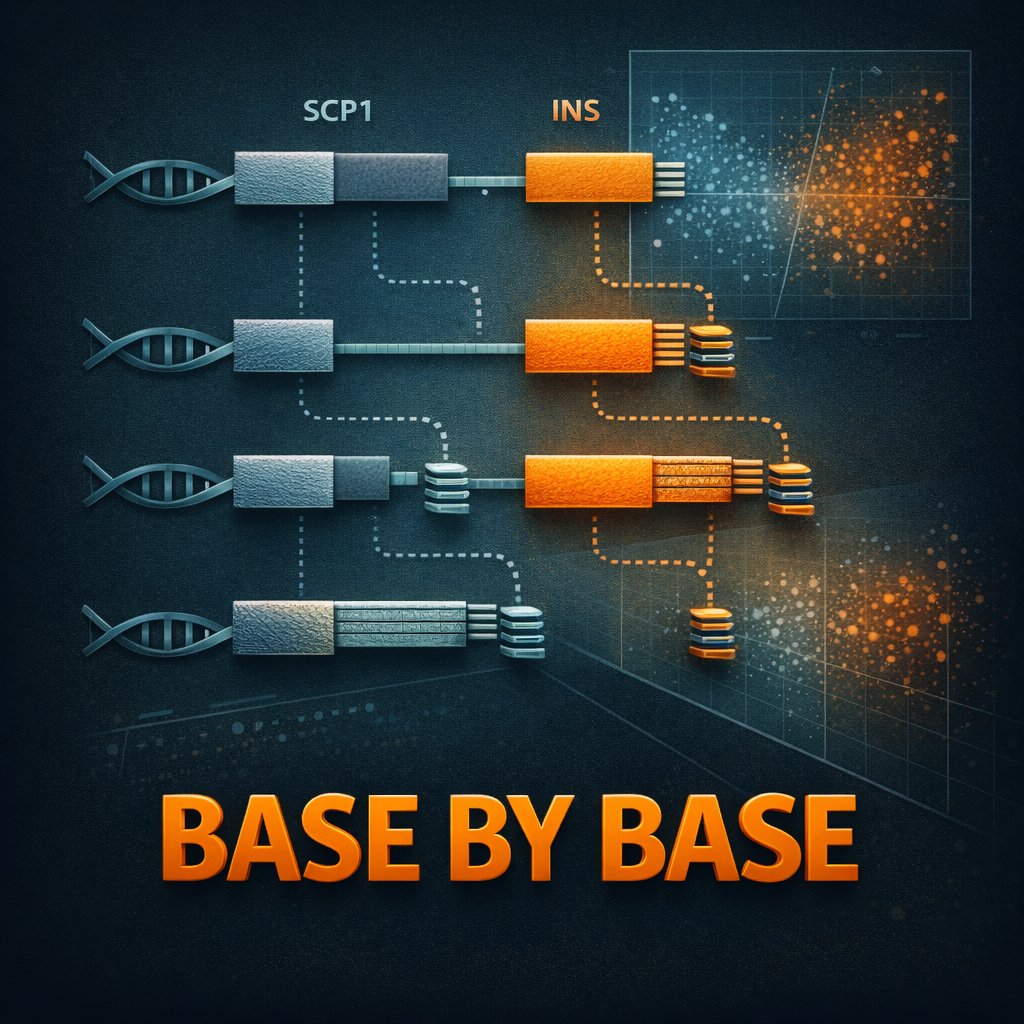
[00:11:45] Speaker C: Definitely. And to bridge that gap, the researchers cross referenced their five ultra RA scores with massive proteomics data from the UK Biobank.
[00:11:54] Speaker B: Proteomics data?
[00:11:55] Speaker C: Yeah. So they weren't looking at DNA anymore. They were looking at the actual circulating protein levels in the blood of tens of thousands of living people. Dax, the real test and the data aligned perfectly. The variants that 5 Ultray flagged exerted effect sizes on actual blood protein levels that were more than five times greater than other non flagged variants in those exact same five UTR regions.
[00:12:18] Speaker B: More than five times greater.
That bridges the gap between digital prediction and physical reality. Right there. The algorithm isn't just, you know, playing with theoretical data. It is accurately pointing to the exact margin notes that dramatically crash or spike real protein production in living humans.
[00:12:35] Speaker C: Exactly.
[00:12:35] Speaker B: And that brings us to the clinical implications for you or for anyone navigating a complex diagnosis. Let's look at how this algorithm translates to real patient outcomes, starting with oncology.
[00:12:46] Speaker C: So cancer biology relies heavily on understanding somatic mutations.
[00:12:51] Speaker B: Acquired errors.
[00:12:52] Speaker C: Right? Acquired genetic errors that accumulate in a cell during a person's lifetime, eventually driving that cell to replicate uncontrollably.
The research team fed five ultra ray data from Cosmic, which is a massive pan cancer database. And the tool illuminated several previously unmapped driving variants that traditional algorithms just missed. A prime example is a specific mutation they found in the 5 foot UTR of the NRAS gene Taken from a breast cancer sample.
[00:13:18] Speaker B: Okay. Nras? NRAS is a critical oncogene. When it functions normally, it acts as an on off switch for cell division. But when it gets hyperactivated, the switch gets stuck in the on position, Driving aggressive tumor growth. So how did a mutation in the margin notes cause that?
[00:13:33] Speaker C: Well, 5 altera revealed the physical mechanism. This specific overlooked variant Alters the splicing process in a very precise way. It converts a normal harmless urf into what we call an N terminal extension.
[00:13:44] Speaker B: An N terminal extension. So it's making the protein longer?
[00:13:47] Speaker C: Basically, yeah. It forces the ribosome to stitch an extra abnormal piece of protein Onto the very beginning of the nras protein structure. This structural change likely increases the translation efficiency and the sheer abundance of the NRAS protein within the cell.
[00:14:04] Speaker B: Oh, wow.
[00:14:04] Speaker C: Yeah. So the cell is suddenly flooded with hyperactive NRAs, pouring fuel on the tumor's growth.
[00:14:10] Speaker B: So by analyzing the dark matter upstream of the gene, they found the exact typo that was physically extending and hyperactivating the cancer gene. It gives oncologists a completely new target to investigate.
[00:14:21] Speaker C: Exactly.
[00:14:22] Speaker B: But this paper wasn't just focused on cancer. Right. They also looked at goes genome wide association studies for common traits.
[00:14:29] Speaker C: Yeah, they did. 5 Ultra A provides biological explanations for common traits that were previously mapped to basically nowhere regions. For example, it explained how a variant in the tgap gene Likely increases protein levels linked to multiple sclerosis.
[00:14:44] Speaker B: Interesting.
[00:14:44] Speaker C: And how a vrtn variant Affects things like height and lung function.
[00:14:48] Speaker B: It's amazing how much is hidden in these regions. And the researchers who authored this study actually specialize in the genetics of infectious diseases. So how does mapping these decoys explain why some people survive severe infections while others don't?
[00:15:02] Speaker C: This represents one of the most fascinating applications of the tool. I think they investigated human susceptibility to tuberculosis, Looking for variants that alter immune system proteins.
[00:15:11] Speaker B: Okay.
[00:15:12] Speaker C: In their in house database of patients with severe unexplained clinical infections, they found a highly susceptible patient Carrying a rare variant in the TNF gene.
[00:15:22] Speaker B: Tnf? Or tumor necrosis factor, which is a critical signaling molecule for the immune system.
I mean, macrophages rely on TNF to trigger inflammation and to physically wall off the tuberculosis bacteria inside the lungs by forming structures called granulomas. Without enough TNF, the immune system simply cannot contain the TB bacteria.
[00:15:42] Speaker C: And 5 Ultra explained exactly why this patient lacked that critical defense. The algorithm showed that the patient had a mutation in the 5 foot UTR of the TNF gene that created a brand new URFA. You start gain, as they call it.
[00:15:56] Speaker B: Another decoy.
[00:15:57] Speaker C: Exactly. This new decoy trapped the scanning ribosomes before they could reach the main TNF instructions. It caused a catastrophic structural failure in translation, significantly lowering their TNF expression and leaving their macrophages practically defenseless against the infection.
[00:16:13] Speaker B: Wow. And they also found the inverse scenario, right? A variant in a different gene called Yeats4.
[00:16:19] Speaker C: Yes.
[00:16:20] Speaker B: 5 Ultrae characterized it as another USTART gain, creating a detour that decreased the expression of the Yeats4 protein. But in this specific biological context, having less of that protein actually granted the patient resistance to tuberculosis. So nature accidentally built a speed bump in the 5 foot UTR that ended up protecting the host from a deadly bacteria.
[00:16:40] Speaker C: It really highlights the dual nature of these mutations. Depending on the specific gene involved, a new URF can either cripple your immune response or inadvertently fortify it.
[00:16:50] Speaker B: So we are suddenly looking at a tool that can decode the dark matter of the genome, explaining everything from breast cancer progression to Ms. To tuberculosis susceptibility.
It is really easy to view this as a technological panacea, but let's look critically at the architecture of the tool itself.
What are the inherent limitations of 5ltra as it stands today?
[00:17:12] Speaker C: Well, the authors are rigorously transparent about its current boundaries. The most significant limitation stems from the philosophy of the machine learning training data.
[00:17:20] Speaker B: Okay, how so?
[00:17:21] Speaker C: Because the random forest model was trained using highly penetrant severe disease variants as the positive controls and common widespread variants as the negative controls, the algorithm carries an inherent bias. It basically risks conflating the concept of rare with pathogenic.
[00:17:37] Speaker B: Ah, I see. It creates a blind spot. A variant might be incredibly rare in the population for reasons entirely unrelated to disease disease, but the algorithm might heavily penalize it simply for being rare, assuming it must be breaking translation.
[00:17:49] Speaker C: Precisely. Furthermore, 5ulattur currently treats the mRNA sequence almost like a two dimensional string of letters, focusing purely on identifying urfs and kozak motifs.
[00:18:01] Speaker B: But the 5utr is a complex three dimensional physical environment.
[00:18:05] Speaker C: Exactly. The tool currently ignores other critical regulatory features, like the physical folding structures of the RNA itself, such as hairpins, that can physically block the ribosome.
[00:18:14] Speaker B: Right.
[00:18:15] Speaker C: It also doesn't account for chemical modifications to the RNA like M6Amethylation, which heavily influences how the ribosome binds and behaves.
[00:18:23] Speaker B: So to truly map the entire upstream landscape, future iterations of five eulotirae will need to integrate those physical and chemical layers, moving from a two dimensional sequence analysis to a three dimensional biochemical model
[00:18:35] Speaker C: that is the next frontier. They will need to train future models on much larger, more diverse data sets that include those structural annotations to really capture the full picture of translation regulation.
[00:18:46] Speaker B: Let's bring all of these threads together.
5 Ultra A successfully decodes a massive hidden regulatory layer of the human genome. By combining the vast timescale of evolutionary biology, identifying structurally load bearing sequences conserved across millions of years with cutting edge machine learning and advanced splicing prediction, it transforms previously ignored silent genetic variants into concrete, actionable medical targets.
[00:19:14] Speaker C: It really does.
[00:19:15] Speaker B: It gives researchers a flashlight to illuminate the dark matter of our DNA, helping us diagnose rare congenital diseases, map the physical mechanisms driving cancer progression, and understand the intricate genetic architecture of infectious disease susceptibility.
[00:19:28] Speaker C: It fundamentally reshapes our understanding of genetic disease. It proves that to fully comprehend the blueprint of human life, we cannot just analyze the main text of the recipe.
We must build the tools necessary to read and eventually manipulate the margins.
[00:19:41] Speaker B: Which leaves us with this final thought. What does this mean for the millions of unmapped silent genetic variants currently sitting in patient files worldwide, just waiting for the right algorithm to translate their true impact?
I mean, how many medical mysteries have already been fully sequenced, but are just sitting in a database waiting to be understood?
[00:20:02] Speaker C: That's an incredible thought.
[00:20:04] Speaker B: This episode was based on an Open Access article under the CCBY 4.0 license. You can find a direct link to the paper and the license in our episode description. If you enjoyed this, follow or subscribe to your podcast app and leave a five star rating. If you'd like to support our work, use the donation link in the description now. Stay with us for an original track created especially for this episode and inspired by the article you've just heard about. Thanks for listening and join us next time as we explore more science base by base.
[00:20:41] Speaker A: In the quiet before the first start sign A five prime doorway holds the line Tiny flags upstream hidden in the glow they can steal the spark or let it grow we sift the noise in a million seams Weight every hint in the reading of genes conservation splice turns context height Finding which changes bend the light Turn it up, turn it down right at the gate One small letter can rewrite fate New you ares lost you are the signal wakes Kozak on the edge Watch the ribosome take.
A forest of rules Learns what matters most from rare sharp cuts to the common ghost Scores that rhyme with protein swings Proof in the the load that a reporter sings not every answer lives in coding lines Some live where the first breath aligns Name the quiet drivers we never saw Give the next diagnosis A clean alone.
Turn it up, turn it down Right at the gate One small letter can rewrite, fade we map the unseen where the story breaks Kozak on the edge now the future waves.